

Interview with Mina Thain
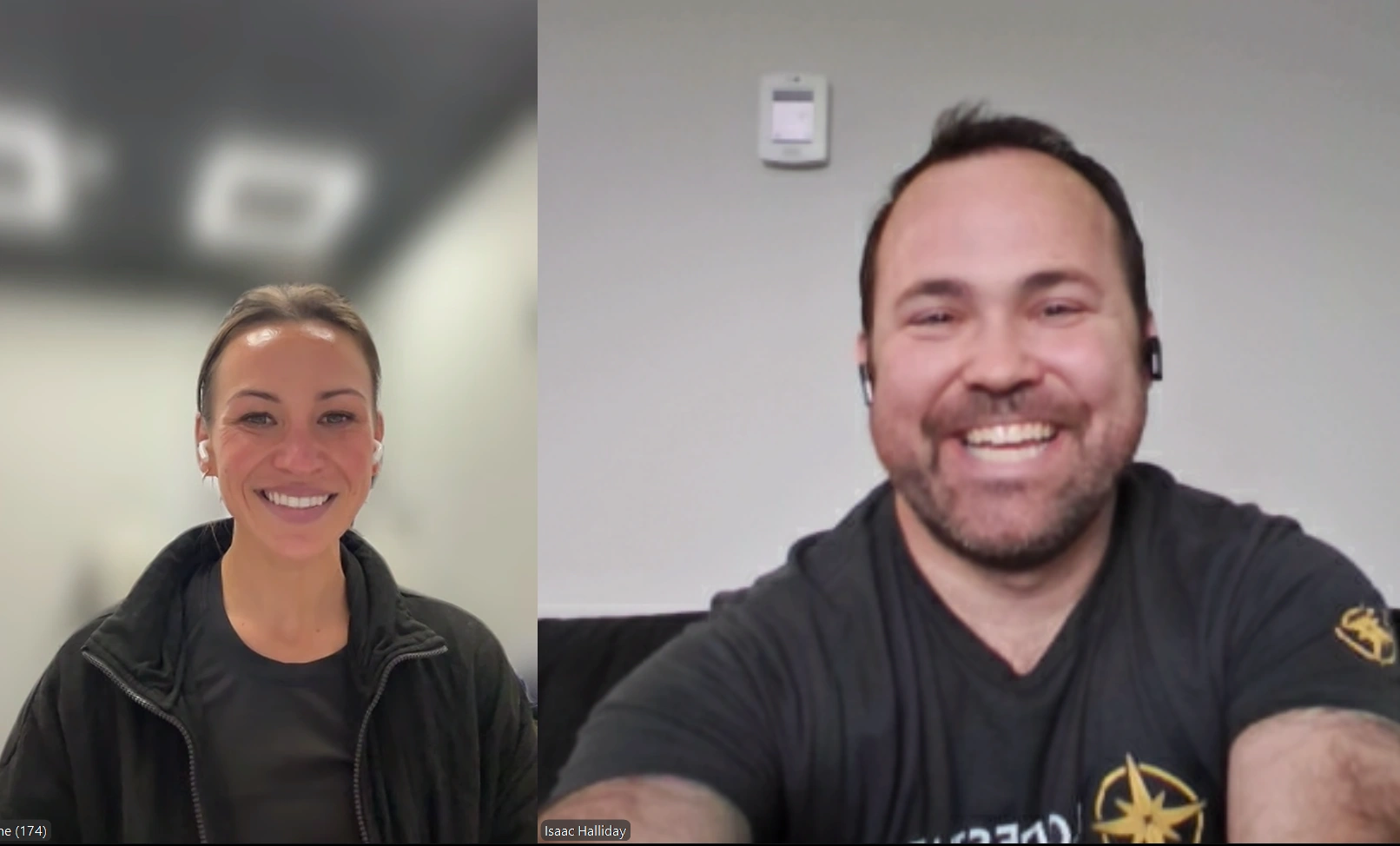
Spotlight Series topic: Mina Thain, Co-Owner of The Smart Fit Method
Guest Name: Mina Thain
Guest Credentials: Co-Owner of The Smart Fit Method
Discussion Details: Here we talk about decreasing your biological age, increasing your health-span and how matching and tracking your “outputs” with your “inputs” leads to greater success in health allowing you to see results faster and with less time in the gym by using cutting edge technology and personalized training to unlock genetic potential in fitness and health-span.
Benefit of Watching: Learn about how to decrease you biological age and live a healthier longer life by tracking “outputs” (VO2 Max, Muscle Mass, etc) rather than just your “inputs” (calories, time in the gym, steps, etc)
Address of guest’s business:
6070 S 1300 E Ste 102
Isaac Halliday: She is the co-owner and operator of The Smart Fit Method Utah. Uh the smart fit method is a fitness industry disruptor using cutting edge technology and personalized training to unlock genetic potential in fitness and health span. Hello Mina, how are you?
Mina Thain: I’m good Isaac. How are you?
Isaac Halliday: I am great. Thanks for coming on. Um yeah well first just tell us a little bit about your story, how you got involved with the Smart Fit Method and a little bit about it and let’s let’s go from there.
Mina Thain: Amazing. Yeah. So the um the Smart Fit Method was started in 2020 and it actually started because my partner’s dad found out that he had a heart condition. He had two cardiologists tell him never walk up a hill again. don’t lift anything over 30 pounds. Now, he had a background of being a competitive cyclist. He was pretty much the fittest guy in any room he walked into. And he gets his diagnostic at 49.
Isaac Halliday: Oh my word.
Mina Thain: Terrible. So, he sits on his couch depressed for six months thinking, “Okay, now what?” And he found out about one of the pieces of equipment that we use here called the Vasper machine. And Vasper is you using cooling and blood flow restriction. And so he found out about this machine. He flew out to the Mayo Clinic, you know, got the testing done to see if it was something that he could safely start working out with. Um and and and they they tested it, checked it out. They’re like, “Yeah, this is awesome. Go for it.” So he purchased one, put it in his garage, started using it three times a week. So Vasper is a 21 minute HIT workout with blood flow restriction and cooling component. It increases V2 max. um helps with building lean mass. But the biggest benefit we see from using the Vasper is um a boost in your IGF-1, your human growth hormone. So, it’s boosting your recovery hormones and helps manage your stress hormones. In the span of I think it was six months, he went from a V2 max of an average 54 year old at 49 to an elite 45year-old. So, just this massive increase in V2 max was absolutely incredible. Yeah.
Mina Thain: Now, at the same time, 2020, 2019, 2020 co, right? And so my partner was going to school at SDSU and ends up calling his dad and saying, “Listen, this is kind of bull. Like I can’t talk to any of my professors.
Mina Thain: My friends are all cheating their way through class. What if instead of investing in my education, we partnered and use this technology that’s kind of brought you back and bring it as something that’s accessible to the general public.” So they worked with data scientists to put together what the Smart Fit Method is. Now um now we obviously combine strength conditioning. Um we’ve upgraded our testing. So we do metabolic testing, body scans. Um but it all kind of stemmed from that life changing diagnostic.
Isaac Halliday: Yeah. Wow. That is that’s cool. That’s um that’s fun to see when like people I don’t know like prove doctors wrong like I’m a doctor like I’m a doctor of physical therapy and it’s still cool when you’re like a man this is like rough but then they like they just prove you wrong and you’re like good job dude like way to do it that’s awesome. So yeah, so you have the Vasper um you have what other like strength things because you have like what the ARX which is absolutely brutal. Um and then you have you have some other things. Tell us about those.
Mina Thain: Yeah. So um I would say probably one of the biggest things when we talk about health span is maintaining muscle mass and bone density. Um, it’s been cited by quite a few celebrity doctors at this point talking about how muscle is the organ of longevity. It’s something we naturally lose as we age and with it goes our capability to do the things that we want to be doing with our lives and ends up, you know, in injury and fractures and all kinds of problems. And so, it’s essential for us to strength train. Um, and the ARX technology is adaptive resistance exercise. Basically, what that means is in very simple terms, however hard you press against the machine, the machine loads with the amount of force that you’re creating.
Mina Thain: So, it’s always loading perfectly to you with the weight that you’re able to hold. So, you can’t overload and you’re not undertraining because it’s adapting to you in real time.
Isaac Halliday: Cool. Yeah. And it is, man, it is brutal because it just like pushes at the same rate no matter what. and you’re just like, “It’s crushing me. It’s coming at me.”
Mina Thain: Yeah.
Mina Thain: But what’s pretty incredible with that is there’s been 46 out of 47 studies showed that training to failure is the most efficient way to build strength. Um, but in a traditional setting using stagnant weights, training to failure can be quite an intimidating intimidating endeavor, right? Because at a certain point I have to not be able to press the amount of weight I started with. But with the adaptive resistance of the ARX, you’re actually able to train to failure without putting any risk of injury into it. So that’s super huge. Um, and then on top of using ARX, we also use the OxeFit. So I’d say ARX is really targeting our foundational strength. So we’re doing the big five compound movements, hitting all the muscle groups in the body.
Mina Thain: Um, but then on top of that, we’ve incorporated something called an OxeFit. So that uses a more of a cable system. It has force plates. We can work more on mobility, stability, and performance. So if you have an athlete training for something sports specific, we’re able to really tailor the program to support that sport.
Isaac Halliday: Awesome. Yeah, that’s so cool. And I like um Yeah, I like how it you can tailor it um but also uh like cuz I’ve used that one, too. And it like also kind of like adjusts as you like, you know, like the more input you put in, it’s like, “Oh, well, you did that rep really easy, so then like the next rep is harder.” Right. It’s like, “Oh, you need more resistance.” And it just automatically changes that for you, and you don’t have to worry about changing weights or dumbbells.
Mina Thain: Exactly. And I would say the um the ability to also track right over time like one of the things that like I I learned this years ago, but they had they they did this study where they followed up on contestants from the Biggest Loser and and they asked them like what was your you know what was your trick? What was your success measure? Like how how did you maintain that weight? because about 50% or more of the participants end up just gaining the weight back. Yeah.
Mina Thain: And so the number one um like kind of trigger for what people were successful and what people weren’t was tracking it or keeping a journal, right? Because there’s this concept of the gap.
Mina Thain: And the gap is basically if I were to look at myself against my ideal, it’s like chasing the horizon, right? I’m always going to see something that I could fix. But if I look at myself measuring against where I started, that’s what builds that confidence. And so if I can show you, okay, yeah, your energy is a little low today, but in the last 12 weeks, you’ve increased your strength by 20%.
Isaac Halliday: Yeah, you’re just having an off day. We all have it.
Mina Thain: But it doesn’t mean you’re failing in your program, right? And you need that to build that confidence of like, oh, what I’m doing is working and I’m going to continue doing it instead of, oh, you know what? I’m having an off day. Forget it. Throw it out. Right. And so, I think that that is a huge um for just building that confidence as well as reporting back that like what you’re doing is working for you.
Isaac Halliday: Yeah. Yeah. And that’s one thing I love about you guys is like everything is measured, right? And it’s on the screen in front of you. like, “Hey, your last rep, you pushed this hard. Try to push that hard this rep, you know, or you went this fast at this time.” And and it just like measures. You can see it right in front of you.
Mina Thain: Yeah.
Isaac Halliday: And then it logs it into that app, too. And you’re like, “Oh, you know what? No, I have been doing better over time.” Or these numbers are improving even though this last week have been terrible because whatever, you know, because of whatever, right? You went on vacation, you got sick, you had something stressful happening. Like life’s happening also in real time.
Mina Thain: Yeah, it is. It is. If only like health was like this nice perfect, right? This line that just like oh, it’s always getting better.
Isaac Halliday: Yeah, that’s so cool.
Mina Thain: And I think like on on the on the tracking portion, I’d say that’s probably the most important thing that we’re doing in here is tracking your data. So on top of, you know, tracking your strength improvements, um we also do body scans monthly. And I like to call them our accountability trackers because if you’re getting stronger, you’re getting fitter, but your body composition isn’t moving in the direction that you want it to be moving in, something’s off in our habits. But it allows us to catch it before it becomes too much of a problem. And I see this more with females, but honestly, males and females. They start working out, they want to get in shape, and all of a sudden they drop their calories to like 900 calories. And you’re and you’re like they’re like, “I don’t understand. like I’m I’m not losing any weight.” You’re like, “Your body is freaking out.” And you and if I can scan you and I see, oh my gosh, you’re losing lean mass. You’re just hanging on to fat mass. Your body’s totally in survival mode and I can get you built back to the appropriate calories. And then your body is like, oh, this is a safe environment and actually starts dropping that fat.
Mina Thain: That’s huge. And if I didn’t have that data, I wouldn’t be able to make that kind of informed decision.
Isaac Halliday: Yeah. Yeah. I love it. And I love um cuz I’ve talked with you about this before too. Um and you’re like one of your biggest like misconceptions that you believe is out there is like the inputs and the outputs, right? And you guys focus on the outputs and the and I don’t know, tell us tell us more about it.
Isaac Halliday: You’re so much more eloquent when you talk about it than I am. So tell us about I mean we already kind of just touched it, but like yeah, go into it a little bit more.
Mina Thain: To be fair, that’s what I talk about all day long. I have more reps in. Um, but I would say that uh a big reason for this is because we don’t in in most of our like fitness endeavors. That’s what we get measured on or that’s what we’re tracked against is our inputs. How many times did I work out this week? How long did I go for a run? How long did I do this? I was in the gym for two hours. But if I’m in the gym for two hours talking to Isaac and changing my music and taking my selfies and I work out for 20 minutes, that doesn’t make a difference. But my Apple Watch told me that I just burned 3,000 calories because I said I was doing strength training for the last two hours, right? Those are all inputs.
Isaac Halliday: Yeah.
Mina Thain: It doesn’t at all measure what I’m actually able to do because of the training that I’m doing. So in here we’re focusing way more on outputs. So how do we train to increase your fat burning efficiency? A lot of times it’s more zone two. We’re so conditioned to exercise effect over effective exercise that I’ll have people arguing with me like, well it doesn’t feel like I’m doing very much. Like, but your chart says that at this zone we’re burning 70% fat and at this zone we’re burning 12% fat. You told me your goal is to burn fat.
Mina Thain: What zone do we want to be in? But I have the data to support that. And that allows me to measure what you’re able to do, what your outputs become, increasing your V2 max, increasing your strength, rather than measuring how many hours you’re in the gym.
Isaac Halliday: Yeah. So that’s kind of the focus of like inputs versus outputs and like measuring it obviously is critical um with being able to see like where your inputs and outputs are kind of set, right?
Mina Thain: Yeah.
Isaac Halliday: Yeah. I love that. Right. I mean inputs are important, but they have you don’t get the output. They have to match the output, right? And I think and I think you’re so right like we focus on like oh I went to the gym four times this day you know or this week but you’re not really logging like what are you getting out of those four visits what was the quality of those of those gym sessions right and and I you know or like hey I’m counting all my calories you’re like great but where are those calories coming from and what are you doing with the calories you’re eating or you know cuz a lot of people don’t understand like you have to eat to lose weight or you have to eat to gain muscle. You have to like right a lot of it is like oh I just got to cut my calories. It’s like well match your outputs you know.
Mina Thain: Yep. 100%. That’s huge. And I would say even like um something we talk about a lot in here is your optimal zone, right? Too little you’re getting no stimulus.
Isaac Halliday: Nothing’s happening. That’s like 80% of America.
Mina Thain: unfortunately. And then you’ve got this 1% who’s doing like way too much and their cortisol is out of control. And then you’ve got this real small group of people who are actually giving themselves the appropriate dose without going way too far one way or way too far the other way. If you overtrain trying to increase your V2 max, you’re doing zone five rides five days a week, you’re going to actually see a decrease in your V2 max because your body’s not able to adapt to that stimulus. So that input’s important, right? Because if my goal is to increase my V2 max, the input I need to have needs to be dialed so that I’m being strategic about increasing that V2 max rather than just, well, then I’m going to go really hard. And Utah being one of the uh most active states in America. This is something that we run into all the time where it’s like, no, actually can bring it down and you’re going to optimize your training. So huge.
Isaac Halliday: Yeah. Oh, I love it. I love it. And you brought up V2 max like a lot of a lot. So tell it for everyone who doesn’t know what V2 max is, what is it and why is it important?
Isaac Halliday: Um on a on a really like what is your V2 max?
Mina Thain: It’s the amount of milliliters of oxygen per kilogram of body weight per minute that your body is able to convert into energy. In really simple terms, it’s how much oxygen your body can turn into energy at your highest heart rate. At a certain point, something gives out. either your muscle or your lungs. And so, um, V2 max tends to be the biggest longevity metric that we have to measure as far as quality of life. Uh, in fact, if your V2 max drops below a 16, that typically translates to you no longer being able to live independently.
Mina Thain: Now, V2 max is something we lose as we age. So after the age of I think it’s 30, we lose 10% of our V2 max per decade. Now it is a metric that we can change, right? So if I train properly, I can increase my V2 max. And the higher my V2 max is, the easier it’s going to be. And the that decline that naturally happens is going to be um less drastic because I have a higher starting point.
Isaac Halliday: Yeah. Yep. Yeah. I love it. Does that answer your question?
Isaac Halliday: No, totally. Totally does. Right. And you mentioned it with like with lifespan. Um, right. And and I think you guys get this perfectly with with health and and exercise and everything like that is right. Is we in an ideal world, right? And maybe maybe you could disagree with me. I don’t I don’t care.
Isaac Halliday: Uh, but we want to be like, hey, I’m healthy. I’m healthy. I’m healthy. I’m healthy. I die.
Mina Thain: Right. 100%.
Isaac Halliday: Yeah. Have a good nice So, you’re healthy through your whole life and then all of a sudden you’re like, “Okay, right.” And the body finally just says, “I’m done.” And it cuts off and you’re dead. Right? Rather than, “Oh, look, I’m healthy, 30. Oh, whatever.”
Isaac Halliday: Right? And then you’re in the nursing home for a decade or whatever. And you, you know, it’s hard to move around that last 10 years of your life. Everything’s uncomfortable.
Mina Thain: Yeah. Yeah.
Isaac Halliday: And that’s what you guys like really focus on, right? Is being healthy for your whole life rather than like slowly deteriorating and which is why V2 max is so important because it keeps you up and moving and doing things.
Mina Thain: Yeah. I would say my favorite um way to talk about it is by the time we’re in our 50s, most of us have a financial retirement plan, right?
Isaac Halliday: Mhm.
Mina Thain: Um, but very few people actually think about their physical retirement plan, right? Like, so we we we work all of our healthy years and then we retire and sit on the couch and wait for that nursing home you just talked about. Um, but if we’re actively taking care of our health, building muscle, increasing V2 max, that’s investing in your physical retirement plan because we know studies have shown we automatically decline as we age. So, if I can invest in my health, build that muscle mass, increase my V2 max, have a strong aerobic base as I age and that natural decline starts to happen, I have a plan and I’ve done the work so that I can do that, live a long healthy life and drop dead, right?
Isaac Halliday: That’s awesome. All right. And part of that, I guess, and you guys kind of track it as well, um, is biological age versus chronological age, right? Tell us the difference and how you measure how do you measure the obviously we know what chronological is, right? Been alive so long, but how do you measure the biological age and how does that differ?
Mina Thain: Yeah, it’s a great question. Um, the chronological age, like you said, there’s nothing you can do about it. You’re born when you’re born. you’re as old as you are. Um, but then when we talk about your biological age or the other way I kind of like to reference it is your fitness age. It’s basically how your cells are performing. And exercise has been proven time and time again to be the biggest impact on reversing biological age or how your cells are functioning. the more we exercise, strength, train. Um, something we use in here is oxygen, which is incredible for cognition co and preventing cognitive decline. Like all of those things will impact your cellular age and your cellular function. And so, and it’s a metric that we can control. I had a guy who was he worked with us for in a 3mon span. He was able to reverse his biological age by 9 years, right? So he increased V2 max, increased strength, losing fat mass, bringing down those metabolic risk factors. And so now he’s and he has better energy, and he’s sleeping better, and he has less aches and pains. So that’s kind of like what it translates to in real time.
Mina Thain: And I would say that’s probably one of the most interesting things. Like I’ve been working in The Smart Fit Method for the last six years and you can there’s a marked difference. someone walking in in their 60s or their 70s if there’s someone who’s exercised versus someone who hasn’t in their past. Um both on like again cognitive function, the way they move, their posture, like it really is an impact especially after the age of 50, you can see that difference.
Isaac Halliday: Yeah. Yep. That’s Yeah. And and it’s huge. And we we often don’t think about that, right? were just like, “Oh, I’m 65 years old or I’m 70 years old.” It’s like, well, you might chronologically be 70, but man, if you had a biological age of a 55year-old at 70, you’re going to be living 15 years longer than the average person, you know, like Yeah. Well, too, right?
Mina Thain: Yeah. Totally. You’re biking with your buddies in their 50s and you’re in your 70s, but because you’ve taken care of your health, you’re able to keep up at that pace. It’s huge.
Isaac Halliday: Yeah. Which I think we can all agree that like I don’t know, maybe some people don’t agree, but I mean like I want to live as healthy and as long as I can, right? I don’t want to just be like, “Oh, I’m I’m this old that means I can’t do that, you know? I want to be able to do everything, right? Until I can’t, I guess.”
Mina Thain: Yeah. I I totally agree with that. Like I don’t want the word like can’t in my vocabulary.
Isaac Halliday: Yeah. Yeah.
Mina Thain: Maybe don’t want to validate, but if there’s something I want to do, I want to be doing the things that support so that when I get to that point, I can actually go do that thing.
Isaac Halliday: Yes. Totally. Awesome. Um, yeah. And then tell us about your journey through since using the Smart Fit Method, too, cuz right a lot of people be like, “Oh, well, you’re Mina, you’re already fit. You’re like, what do you need it for?” you know, tell us about your journey and like how it’s how it’s helped you, right? Because I think a lot of people too, like they see all these like social media influencers or they go to the gym and they see the personal trainers and they’re like, “Well, it’s easy for you to say because you’re already fit.” Like, but how has it helped you um personally?
Isaac Halliday: Cuz it has, right?
Mina Thain: I think like Yeah. Oh, totally. So, I think like a little bit of like backstory is important because um I’m not somebody who started The Smart Fit Method and this was the first time I’ve ever followed a workout program. I started working out when I was like 12.
Mina Thain: Like I would I had a brother who was two years older than me who was super fit, athletic, and I for some reason decided that he was going to be the person I competed with my entire life.
Isaac Halliday: That’s good.
Mina Thain: And so at 12 years old, I was doing, you know, 50 push-ups and 50 sit-ups before I went to bed. At 14, I started powerlifting. At 15, I was going to CrossFit. And I would say I was definitely in the category of undereating and overtraining. And my body composition wasn’t anywhere I wanted it to be. Um, and it was something like I would say was a like a big thought energy drain in my life of like when am I going to have time to work out and how many workouts can I get in today and how many calories did I eat? And I was so like I would say anxious around it. There’s a lot of like stress around trying to get to this this body composition and going nowhere. Um, now I work out like an hour a half a week and I’m in the best shape I’ve ever been in.
Mina Thain: And it’s really like and like even with like diet, it’s like, okay, I started focusing on protein, getting one gram of protein per pound of body weight and I work out an hour and a half a week, like throughout the week. Um, but I would say like I was just being random with my training, right? I talked about the importance of tracking it and I think one the um heavy weightlifting consistently with ARX um training in my zone two not zone threes and fours where I’m just burning carbohydrates and then I want to snack after like actually like being dialed in with my training. Um, and and and so over time, and then the other thing is like the workouts are 20 minutes. So, like there’s no excuse. And so, I’ve consistently been following a program for almost six years now. And in that time, I’ve dropped over 10% body fat.
Mina Thain: I’ve increased my V2 max from a um I started at 40. Now, I’m at like 59, which talking about reversing biological age, like got my biological age down to 18. I’m like, great, I’m aging in reverse. Um, and then I’ve been able to see my strength. Like, I went up from hardly being able to do a pull-up to like easily cranking out 10 pull-ups.
Mina Thain: And that’s like, yeah, because I do a pull down for two minutes once a week. Like, just absolutely incredible. Um, and I would say the other thing, and and like I hear this from my clients a lot, but also I think in my own experience, I don’t have pain.
Mina Thain: like there’s not like, oh yeah, I went to this great class and my shoulder is killing me. Um like my body feels good.
Mina Thain: And I feel like that that just like that consistency, that like lack of stress because it’s like yeah, I know what I need to do. Doesn’t mean I’m always doing it, but I know what I’m supposed to be doing. Um and then I have data to like support it.
Mina Thain: So I know when my habits get out of whack. Yeah. and and I have these, you know, body scans. I have I can see in real time whether or not I’m tracking where I want to be and I know what I’m doing, whether or not it’s the right thing to get me where I want to be. So, I think that that has been a huge
Isaac Halliday: Yeah, I think that is that is awesome. I mean, who doesn’t want to exercise less and look better, feel better? Incredible. I’m talking already. I mean, what an hour and a half a week and still losing body fat and is awesome. Like maintaining muscle, maintaining muscle, all that stuff is way cool. So, it almost feels like it shouldn’t be like, okay, granted, back to what you said, it’s not an easy workout, but it kind of feels like, oh, is this easy? Like, I have to eat.
Mina Thain: Yeah. I’m like, I just have to stimulate the muscles like uh strategically. Cool.
Isaac Halliday: Yeah. Cool. I’m in. Yeah. Sign me up. Right. Um Yeah. Well, that’s that’s awesome. So, um how can people get a get on in hold a touch of you or with The Smart Fit Method? Where are you located? All of that, info.
Mina Thain: Yeah. All our info. Um so, if you want to follow us on socials, it’s SmartFit Method Park City or SmartFit Method Salt Lake City. We have two locations in Utah. um one in Millcreek in the Brickyard Plaza and one in Kimball Junction in Park City. Um best way to come and check it out is we offer a free complimentary session where you can come in, try it out, get an idea of what the program is and if you just go to the smartfitmethod.com, you can schedule a complimentary session to come check it out yourself.
Isaac Halliday: Awesome. Well, Mina, thanks for coming on. Is there anything else that you want to talk about or did we cover most of it or save it for next time?
Mina Thain: I think we covered most of it. Thank you so much, Isaac. Appreciate your time.
Isaac Halliday: Awesome. Well, thanks for thanks for coming on and um yeah, everyone go check out The Smart Fit Method. They’re They’re really cool.