

Interview with Dr. Lindsay Hall
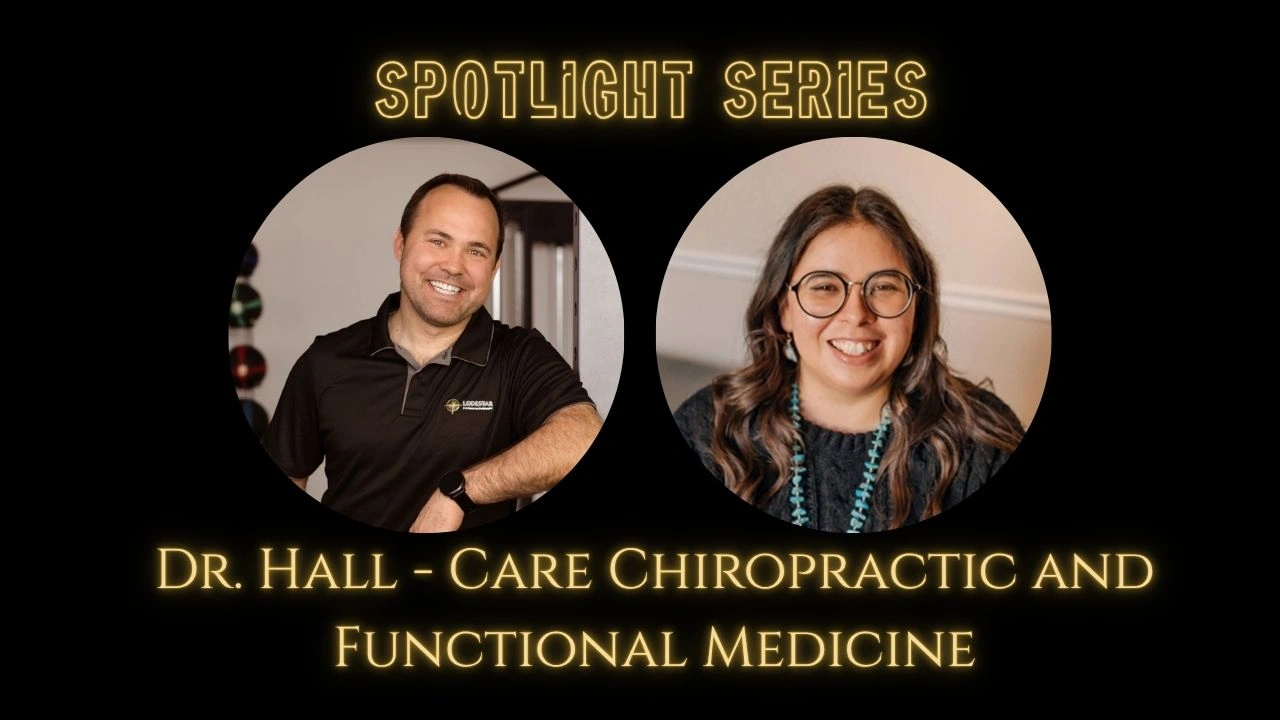
Spotlight Series topic: Trauma Informed Chiropractic with Dr. Lindsay Hall DC
Guest Name: Dr. Lindsay Hall, DC
Guest Credentials: Doctor of Chiropractic
Discussion Details: The difference between different chiropractic techniques. What does trauma-informed care look like in a chiropractic setting. How understanding a patients full story (life, medical history, etc.) impacts their care.
Benefit of Watching: Reduce Medical Anxiety: Demystify the chiropractic process and see how a patient-first, trauma-conscious approach removes the fear from adjustments.
Connect the Mind & Body: Finally understand how emotional or historical stress manifests physically, and how the right care can release it.
Address of guest’s business:
Care Chiropractic and Functional Medicine
5814 S 900 E, Murray, UT 84121
Dr. Lindsay Hall: Doing good.
Dr. Isaac Halliday: Good. Good. Well, um, yeah, to start off, tell us a little bit about yourself, how you started, and just anything you want to tell us about yourself.
Dr. Lindsay Hall: Cool. Yeah. Um, I grew up in Utah. Um, went to Utah State University and then went to chiropractic school down in San Francisco. Um, I got into chiropractic because in my freshman year of college, my family was rear ended and I ended up with some headaches and neck pain after. Um, and my mom actually made me go to the chiropractor. Um, I had never heard of chiropractic. Well, I had heard a little bit about it, but I didn’t know what it was. I just remember my friends in high school complaining about having to go see their chiropractor. One said they’re like, “Oh, man. he twists and pops me and it hurts but it feels good. Or someone was like, “He puts flaming needles in my back.” And I was like, “Are you guys going to a torturer who tricks you into thinking it’s helpful?” So, I was terrified going into the chiropractor. Um to the point where I was sitting in the doctor’s office and he was on a main floor and I was looking at his window and I was like, I could jump through that. Like, um so I was like plotting my escape when he walked through the door. Um, but he was very nice and upbeat and just made me feel like, okay, this is safe. It’s fine. Um, and the more I learned about chiropractic and saw like how it helped me, I was became more interested. Um, I wasn’t liking my classes at USU and the major that I was in and was liking my biology courses, which was an interesting twist for me from what high school was. And so I decided to switch over to premed. Kind of looked at physical therapy, med schools, occupational therapy, things like that. And chiropractic just aligned the most and ended up going off to chiropractic school.
Dr. Isaac Halliday: Nice. Right on. Cool. And then you do some fun uh like things within the the Navajo community. That too, right? Yeah. Tell us a little bit about that. I think it’s pretty cool.
Dr. Lindsay Hall: Yeah. So I’m half Navajo. Um and so within the community I do provide care for a lot of u members of well several tribes actually within um this area. Um I’m also involved with like I do bead work. Um I do some like different regalia making and I started learning powo dancing and did my first jingle dress dance um in March.
Dr. Isaac Halliday: Oh awesome. So cool. Yeah. That’s awesome. Cool. Well, um, what is what is traumainformed chiropractic? Because I’ve heard of like trauma informed like, you know, therapies, right? Mental health, things like that. What is how does that translate into the chiropractic realm?
Dr. Lindsay Hall: Um, so with trauma informed, there’s no like specific certification or anything you get. I’ve just been very fortunate to I practice in a building with eight other mental health therapists. Um, a third of my practice are therapists. Um, and so I’ve talked to them. I’ve done a couple of little like trainings and stuff like that um on it. And it most of it is just knowing like personally and just through research and stuff what safety means to people. Um, I get a lot of PTSD patients or people with anxiety disorders. And what I’ve come to learn and observe through patients who have it through myself, um, is and then just like general science is people can’t heal if they don’t feel safe. And so, and there are different techniques or things that you need to be doing to make a patient feel like help a patient feel safe when they’re in your office. So, as soon as I find out someone has PTSD or some kind of anxiety disorder or something like that, you know, we stop everything. I stop and talk to them and say, “Hey, like this is a safe space. You are in charge. So, you don’t like I’m not the, you know, lots of people think, oh, the doctor is in charge.” It’s like, nope. If you don’t like something, you want to stop. Um, if you just need to take a break, then you tell me you’re the boss here. so that they get that power back and know that they can communicate that to me. Um, and then I just make sure cuz their bodies will be at like a higher level of like guarding and scanning for safety and any dangers. So I I never try to surprise them. So it’s like, hey, um, this is what we’re doing. Explain what we’re doing. As I’m going through it, I’m explaining. If I have to touch the back, it’s not a surprise. Like, hey, I’m going to touch your back right here. This is what I’m looking for. and just making sure that there’s no surprises so their body can actually relax and feel comfortable and then they’re able to get better healing results. Um because yeah in the past I’ve like I even learned in school once like that um when patients have that muscle guarding re response um which is a thing that your body naturally does to feel safe it gets guarded to safe you know
Dr. Isaac Halliday: Right save you especially when you’re especially when you’re in pain
Dr. Lindsay Hall: yeah exactly it’s like hey we need to stiffen up keep everything safe um I was told to power through it or how to trick the body to turn it off. Like, oh, what’s that? They turn and then it turns off for a second and then you go through that. And while that does allow us to adjust the patient, which does, you know, lead to some pain relief, I would find that people would be either more sore or it gets harder to trick them and it just it doesn’t help their nervous system feel safe. So then it becomes more and more guarded whenever they come even though they’re getting the results. And I saw that with myself too is whenever I go get massage, chiropractic or whatever, my body just stiffens up and I have to like consciously calm it down. And it’s because most chiropractors aren’t telling me this is what I’m doing. It comes as a surprise. The body jumps and then guards up and then it’s not as effective. So I just want to really make sure all patients feel safe in this space and so their muscle guards can go down. And if they’re not going down that day, if I just let them know, hey, that’s no problem. if they’re working with therapists or have any tools that they use to help themselves feel safe. I’ll be like, “Hey, go do some self-care. Go relax. Let’s try this again tomorrow. Um, we’re not going to push your body through this if it doesn’t want it.”
Dr. Isaac Halliday: Yeah. Yeah. That’s very that’s very good. And I like how you uh mentioned like with auto accidents and car accidents because those you get seriously guarded, right? especially with with like whiplash stuff and the PTSD that can come from it. Um I’m just like just don’t touch my neck. Just don’t do this. And they just get super tense and you’re like okay right this is going to be difficult or more difficult. Right. But yeah exactly. That’s cool. So do you deal with a lot with um with auto accidents then and other patients? What does your patient population look like?
Dr. Lindsay Hall: Um, I’m pretty diverse. So, I do definitely have a portion of my practice that is car accident based. Um, people with chronic pains. I have people I get a lot of transfers from people who have been doing care from um, other chiropractors for years and just aren’t getting the results that they are looking for. Um, and so I’m kind of like a specialist in that where I just help people like let’s get to the bottom of this, what’s really going on. Um, and most of that just comes from patients will tell me it’s like they felt like um, a piece of meat on the table in other practices sometimes um, where it’s just like in out two three minutes. Um, I was in a practice like that before too where they were like timing me like they didn’t want me with a patient more than 3 to 5 minutes and wow. Uh, yeah. I got in trouble a lot.
Dr. Isaac Halliday: That’s That is not a lot of time to be with the patient.
Dr. Lindsay Hall: Yeah, exactly. And I was like, well, this patient needed this. I knew that they needed this soft tissue work to be able to hold their adjustment better or to start feeling better. And it worked, but it took time. And so, um, I’m willing to take that time with each patient. Most of my appointments are either 15 to 30 minutes depending on the severity of the case. Um, so we will take our time to make sure that we’re seeing the results. Um, and if we’re not, then I’m also very collaborative. I love referring to physical therapy, massage therapy. You know, sometimes we see it’s like it’s that mental guarding, PTSD, anxiety disorders. It’s like, hey, let’s are you seeing a mental health therapist? Let’s get that component in there. Um, blood work, working with medical doctors, you know, the whole thing just to really make sure the patient is being seen in every part of their body.
Dr. Isaac Halliday: That’s awesome. Yeah, I really like that you like go kind of more in depth into their why they’re experiencing the pain and the trauma and everything else and why they’re actually seeking your care, you know? Um, making sure that you get the whole picture rather than just like, “Cool, your neck hurts. Flack, right?” So, kind of go over a little bit um because you work a little bit different than what I guess what chiropractors um are thought to do, right? Like you do you do something slightly different. Uh what is your process from when a patient comes in from the first visit to the follow-up visits? Um what does that look like there at your clinic? Yeah.
Dr. Lindsay Hall: So, when people first schedule, um, we let them know like, hey, this is not a 45 minute new patient process or you’re not just coming in to get popped and leave. We are going to sit down. I’m going to learn your full medical history. I want to learn about you, how you function, and then tailor those results to what your body needs. So, um, the first appointment takes about an hour and a half depending on how complex the patient’s like presentation is, medical history, stuff like that. Um, we also include our adjustments in the first um, appointment as long as it’s safe to adjust them. Um, because I find that to be part of my diagnostic process. And also, you know, it’s pretty common. I was even taught in some trainings like don’t adjust them until the second visit or else they won’t come back. Um, and for me it’s like would you want to sign up for care if you’ve never been treated by this doctor? You know, it’s like what if their adjustment style is not something you like? What if your body doesn’t like, you know, respond or whatever? So, I like to use the adjustment as part of my diagnostic process. see how their body reacts to the adjustment, what they’re needing, like how long does it last. So, like if they get pain relief, I’m letting them know like, “Hey, before your next visit, how long does this pain relief last for?” Um, and then like maybe there was no change, in which case like that’s weird. What’s going on? Let’s dig a little deeper so we can really figure out what’s going on. If they need exercises, if they need like muscle work, um, things like that, so I know how the body’s responding to everything. um with uh my initial two. Um if they have blood work, I love reading blood work. I’m actually kind of a nerd about that. I think it’s super fun. And there have been times where I was looking through their blood work and it’s like, “Oh, patient has anemia.” And looking at the pattern, they’re like, “Oh yeah, my doctors put me on some iron supplementation, but the blood work matched more of like a anemia of blood loss.” And listening to their history and stuff, I’m like, let’s refer you to OB/GYN and turns out they had uterine fibroids. So, no wonder their like pelvis and low back was hurting because there’s a lot of stress and strain in that area. And so, making sure we’re getting them to the people that can help them cuz it might not be something that I can help with.
Dr. Isaac Halliday: Yeah. Oh, that’s cool. Mhm. That’s Yeah, that’s awesome. Um Yeah. So, like what uh how long are your treatments typically? like do you is it you know cuz obviously it’s not your your five minutes and the next person um so what is like yeah the follow-ups look like too like how long
Dr. Lindsay Hall: so follow up you know I talk to them about like hey after your first adjustment how did you feel if there’s pain relief how long did it last um cuz you know just being like well everyone comes in twice a week for six weeks and that’s the prescription that’s not the case most people I find come in like once a week for three to four visits and then they’re good. Um some people need longer stretches or we start like training my goal is to train people to not need adjustments as much. We’re getting their body moving. Um if there’s a dysfunction of like oh this joint keeps getting stuck. What are the muscles doing in that area? Do we need to add in exercises? If the exercises I know are not specialized enough then referring to physical therapy so they’re really getting that muscular rehab in there. um tight muscles that won’t relax for for me like massage therapist, you know, things like that. Um so we’re going to work together to see how they did for that week um to kind of figure out like oh actually I need to see you in a couple days cuz this is a pretty significant like um acute injury that’s really inflamed or you know what, you’re doing pretty good. Let’s try a week out. Um some people it’s like miracle patient like well call me when you need me like
Dr. Isaac Halliday: Yeah. Yeah.
Dr. Lindsay Hall: And that usually takes about 15 to 30 minutes, probably 30 minutes for the second visit because we’re really talking and learning and figuring out together what their body’s going to need. I let them know what I’m looking for to start expanding those visits. Um like when we go to out to two weeks or when we go out to once a month and then from there call as needed. Um some people like to just like, hey, it makes me feel good. I have a stressful life, a demanding job. I want to be here every couple of weeks or once a month just to tune up and feel good and that’s fine. Um, but yeah, it’s that first visit that’s really long and then they kind of go down and the more their body heals the faster it becomes. So like my easiest healthiest patient is still about six minutes to adjust. Um, but usually not less time than that cuz I’m still every visit checking head to toe. Um, I don’t just adjust the spine. I also adjust the extremities. So looking at their arms, their wrists, feet, ankles, knees, all that.
Dr. Isaac Halliday: Cool. Cool. Um, yeah. I like how how personalized it is, right? It, like you said, it’s not just like, hey, you need to come in two times a week for ever, right? Or whatever. I think that’s I think that’s a big misconception, too, with chiropractors is I think people are like, “Oh, if I go to chiropractor, they’re going to want me to go forever and I’ll be there for my whole life.” And you know, it’s like, well, you got to get the right chiropractor and right and they won’t want you the rest of your life, you know, unless you want it, I guess. But um yeah, I think that’s something that you
Dr. Lindsay Hall: see with a lot of like even different fields, chiropractic especially, but even um my former mental health therapist I worked with was like, you shouldn’t need therapy forever. Like, you know, it’s all about giving patients the tools to be able to be able to manage their own life and then give them the warning signs of like, hey, this is when you should come back and get checked so it’s not getting flared up too bad.
Dr. Isaac Halliday: Yeah, totally. Totally. Um, so what are your techniques that you use versus I don’t know. I’m like the chiropractor I’ve met a lot and you all tend to do things a little bit different. Um what what are there the different techniques out there and what is your technique and Yeah, let’s just let’s go there. Let’s All right. Yeah.
Dr. Lindsay Hall: Yeah. Um I’ve actually studied a lot of techniques in school. So every chiropractor learns your basic popping type of adjustment and there’s a few different techniques within that realm. Um and then there’s instrument based adjusting. Um and you can do like a whole protocol with the instrument adjusting. One of them is called activator method where they use a little clicker tool kind of like this. Um it just clicks and there’s like a whole protocol or you can use that in place of your hands. So you’re using a different technique but replacing it um with the tool. Um there’s posture based techniques. Um there’s techniques that are specifically meant to be light force um which again follow follow their own protocol. Um some adjusting tables also have pieces that pop up and drop down and things like that. And then there’s like soft tissue techniques where you adjust the soft tissue. Um and I kind of got a really good education where I was able to kind of try them all and see what works best. And sometimes that means I’m changing it up like this patient needs this one, this one doesn’t need that. Um, so my table does have the drop pieces. Um, I use that only usually only for like adjusting the pelvis. Um, and if I have a PTSD patient or someone who’s really just really guarded and tight and jumpy, um, we’re not using the drop table.
Dr. Isaac Halliday: loud noise and even though the drop is like But it’s a quick movement. Yeah, it’s a quick movement.
Dr. Lindsay Hall: Yep. Exactly. So, you know, some people get that, others don’t. Um, the majority of my adjusting is with the adjusting tool. So, I have the little clicker I just showed you. I also have a mechanical version. People like to call my jackhammer, which sounds more aggressive than it actually is. It’s very gentle, but it just sends multiple impulses instead of just one click. Um, and that’s the majority of my adjusting technique. Um, I do do soft tissue work as well. Um, and I’m also trained in posture correction. So, in cases where I’m just seeing things not resolved very much or if the patient already has X-rays and I know what their spine looks like, we can add in some additional exercises or spinal orthotics um to retrain proper posture. because if you’re walking around like this all the time, you’re going to get tight. So, let’s train that out so you’re not always having to come back to me.
Dr. Isaac Halliday: Yeah. Oh, awesome. Very cool. So, um man, I had a a question and it just escaped me. Um uh man, it was a good question. Um Oh, yeah. Uh so, like when people like they’re like, “Oh, but I really just want a pop.” And I think this like comes a lot up in the chiropractic realm, right?
Dr. Lindsay Hall: Yeah.
Dr. Isaac Halliday: Um what is the pop like why you know like what is what is happening with the adjustments within the body? I think a lot of people like one they don’t know and uh but uh yeah what is what is going on in the body when when you adjust somebody or when there’s why are people always searching for the pop? Right.
Dr. Lindsay Hall: Yeah. Right. Um, so chiropractors are trained um to help find what I call restrictions within the body. Um, so you know, a lot of people will think like I’ve heard this before where someone was like, “If your joints moved like chiropractors say they moved, then we’d all be twisted and gnarled.” And I’m like, “Yeah, you’re right.” Because they’re not moving that way. Um, if I look at someone’s neck on X-ray, I’m not going to generally find like you’re stuck here, you’re stuck there, because they’re not like a joint that’s shifted out of place, you know? Um if they’re like out of place, I’m sending them to the ER. That’s not something.
Dr. Isaac Halliday: There’s a big problem. Yeah.
Dr. Lindsay Hall: Yes. Exactly. But all joints are supposed to be kind of bouncy. And what I’m looking for is, you know, you fall on your hand and suddenly that joint just kind of gets an impact and now it’s lost that bounce because it’s kind of stuck and now it’s not moving the way it’s supposed to. Um, a really good one that people can generally feel on themselves is like right here in the your elbow where it bends. If you put your finger right on that inner elbow and you twist your arm over and then twist it back, that when you come up up like this, that bone should pop into your thumb. Um, or sorry, it should glide backwards. And um uh I usually see if someone’s fallen, it either stays in place or it kind of pops forward instead of gliding backwards. So it’s like, oh, that joint’s not doing what it’s supposed to. Does it? It’s still within its normal ranges. It just is moving weird or not moving at all. And so I’m looking for all those in every part of the body. Like why is this joint not moving? How is it not moving? Is it like, you know, all the vertebrae are turning this way like it’s supposed to, but this one doesn’t turn to the other side, you know, things like that. And so that’s what chiropractors are trained to find. And then we have very specific vectors of force to release that joint and get it moving again. So it’s all very small, nothing super out of place, but even these little tiny restrictions throw off the biomechanics of the area. that little joint in here that’s not gliding backwards like it’s supposed to is going to tighten up the tendons that go to your hand, you know, or in your forearm, you’re going to see tight muscles in there. Um, up the arm, too. Um, it just changes that muscular structure and everything, which that tension over time, it just burns more energy. Um, causes pain, especially if it’s like an instant impact. Then, you know, it can be acute, really inflamed, and angry. Sometimes it’s just little things that happen over time due to poor posture. um these joints just get stressed and stop moving and we just have to go in and get them moving. So the pop is generally like oh this joint’s out of place let’s set up there’s doctors are the chiropractors are still using a very specific vector just with their hands and then they’re doing a quick motion that usually causes a pop to get the joint moving again. Um and then what I do instead is I use the instrument adjusting. So I’ll just set this up on the joint, you know, just be like, “Okay, it needs to be here. It needs to be at this angle or whatever to get it release. Release a little click. It sends a little impulse through the joint to release it and get it moving again. And then we start seeing that bounce back or seeing that joint glide the way it’s supposed to.
Dr. Isaac Halliday: Cool. Very good. Very good answer. Yeah. So, what happens if you don’t hear a pop? Does that mean the treatment is null and void?
Dr. Lindsay Hall: Nope. I rarely hear a pop in my office. So, um, it’s just a matter of is the joint moving, is it not? The pop is just gas releasing from the joint. So, you know, if you hear a pop, then, you know, as long as that joint’s moving, great. If it’s not, then maybe they hit the wrong joint. But, so that’s what I’m looking for. And I’m always reanalyzing why I’m adjusting. I always pop and be like, “Cool, it must be good.” And like afterwards, I’m, you know, after I check it, I’m checking like, “Okay, it’s moving. Now, how are the joints around it responding? Cuz sometimes joints will be stuck because this one wasn’t moving or there’s been so many compensations where the joints above and below had to move too much because that one wasn’t doing what it’s supposed to. So, let’s recheck those areas. Are they responding? It’s all working as a full unit now, or is it still kind of segmented? This one’s not moving. This one’s moving too much. Um, let’s recheck and recheck until everything is nice and fluid and moving the way it’s supposed to.
Dr. Isaac Halliday: Awesome. Yeah, that’s very cool. Um, is there anything else that you want to let everybody know about you, your business, anything chiropractic?
Dr. Lindsay Hall: We covered quite a bit, right? I’d say that yeah, like what you said earlier is all chiropractors practice differently. Um, and so like if you go to someone and it just doesn’t feel like you’re getting the results you want, um, you just don’t feel like you vibe there. It’s always worth like researching and finding someone else, see if that is the place for you. Um, I’ve even done that with patients who do come in seeking a pop. My um, front desk person, who’s my husband, he’s really good at screening and being like, “Hey, she doesn’t pop. So, if you’re coming here looking for this, this is not the place for you. Um, we’ll refer out to whoever else who does that. Um, or but you know, some of them still get through and then they’re like, “Just pop me. Just pop me.” I’m like, “I’m not going to do that.” So, but like the in which case just refer out and that’s fine. It’s doesn’t mean I’m a bad chiropractor. Doesn’t mean they’re a bad patient. They just need to find what works for them. And you know, if chiropractic’s not it too, like I said, I’m happy to refer out to other providers. Let’s get to the bottom of it. In the end, it’s the patient that matters. I don’t have this idea of I’m in competition with all the other chiropractors in my around me, and I’m not in competition against physical therapists. I’ve even heard that at a seminar where they’re like, oh, you know, the physical therapists are trying to steal your patients. No, they’re not.
Dr. Isaac Halliday: There’s there’s no right. Maybe there are some, but there probably are, right? I mean, every every profession has that person that just says, “Ah, they’re all mine.” I don’t know. But yeah. Yeah. But yeah, that’s totally true. Like I And and with anything with physical therapy, you know, chiropractic, dentistry, whatever it might be, like there’s Right. If if what’s not working for you there doesn’t mean the next person isn’t going to work for you, right? You just got to find the one that does the right type of care for you in your situation and y fits you. So,
Dr. Lindsay Hall: yep. Those two to three minute clinics do have their place honestly. There are some people that’s all they want, you know, great. I’m glad they’re there for that. Um, but in my office, if you’re looking for a relaxing experience, I have patient patients falling asleep. Snoring is not abnormal to hear here.
Dr. Isaac Halliday: A very good one-on-one uh personal approach that you take and I love it. Yep. Well, how can people get a hold of you if they’re like, “Hey, you know what? I like Lindsay.” How do they get a hold of you?
Dr. Lindsay Hall: Pretty easy. Um, so our office phone is actually a cell phone. So, and my husband, he’s my front desk person. He has it on him too often, honestly. We’ll be on date night. He’s like, “Oh, someone’s calling.” I’m like, “It’s fine. It’s like 7 o’clock at night.” Like on a Saturday. You don’t have to answer that. but he’s very committed to making sure everyone who needs to get a hold of us does. Um, and our number is 385-487-2664. Um, can call or text that number. Um, and then our office name is Care Chiropractic and Functional Medicine. Um, and so our email is just front [desk@carecfm.com](mailto:desk@carecfm.com). Um, our website is carcfm.com or will be. Um, we’re in the middle of a name change. So, that name that domain is purchased. It’s just not attached yet, but
Dr. Isaac Halliday: awesome.
Dr. Lindsay Hall: If you just look up Care Chiropractic and Functional Medicine, it’ll lead to our website. Um, and then I’m at um on social media platforms, Facebook, Instagram, Tik Tok. Um, it’s just carcfm as well. Pretty easy to remember.
Dr. Isaac Halliday: Cool. Awesome. And where are you located?
Dr. Lindsay Hall: I’m down in Murray. So, I’m on 5814 South 900 East in Murray. It’s a little office park with pink brick buildings. Um, and then our office shares um, like I said, we’re here with eight mental health therapists and a massage therapist. So, just come into the lobby. I’m right to the left when you come to the lobby.
Dr. Isaac Halliday: Awesome. Very cool. Well, there you have it. Thanks for coming on, um, Lindsay. It’s been good talking with you again. Uh, it’s been too long since we we last chatted, so
Dr. Lindsay Hall: know, right?
Dr. Isaac Halliday: But um but it was good to to meet with you again. So yeah, thank you. Um yeah, maybe maybe next time. I’ll have to stop by. You’re just right around the corner from us, so I’ll have to stop by and say hi. So, all righty. Well, we’ll see you next time. All right. Thanks.
Dr. Lindsay Hall: All right. Yep.
Speak With a Certified Specialist Today!
Is your pain making it difficult for you to concentrate?
Are you hoping it will just go away but it’s still hurting you?
If you answered “Yes” to any of those questions, you should call us and make an appointment to see one of our qualified Physical Therapists. We will interview you, find out your problem, lay out the customized plan for you and work with you personally.
Call our office now at (385) 743-2757 or request an appointment:

Mon,Tues,Thurs: 8am-6pm
Wednesday: 2pm-5pm
Friday:8am-1pm