

Interview with Ron Hansen
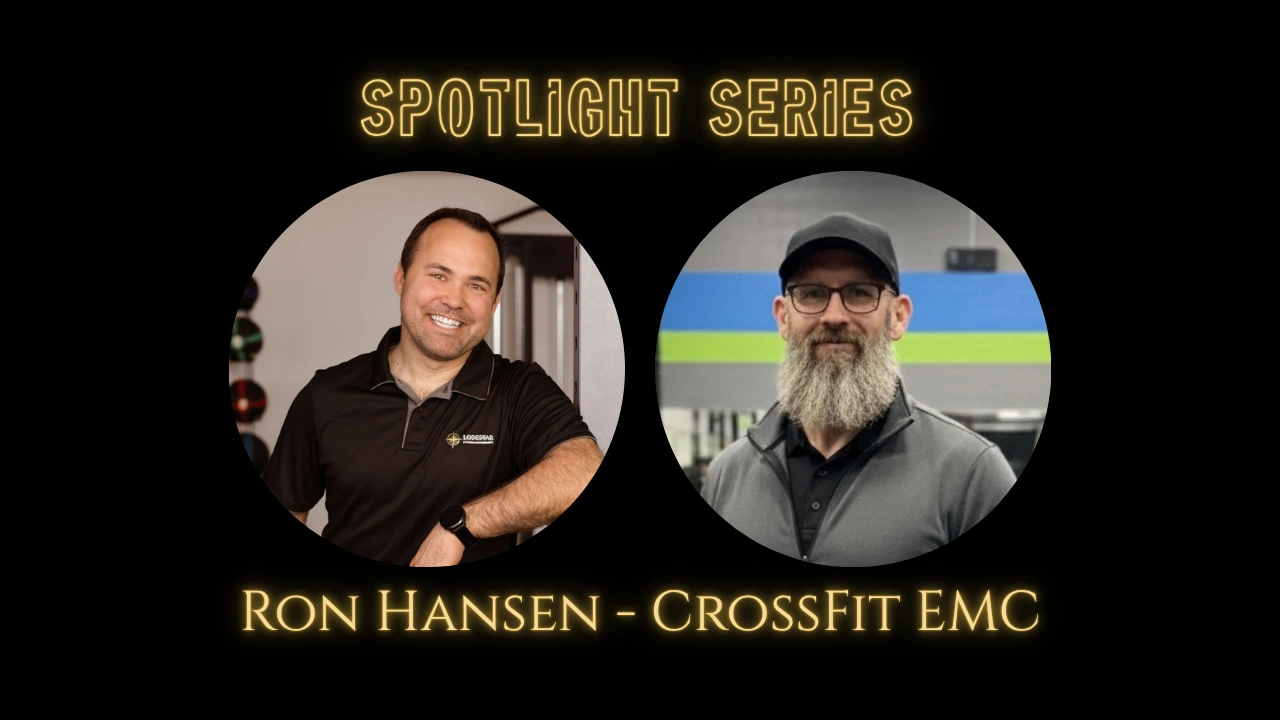
Guest Name: Ron Hansen
Guest Credentials: GM and Head Coach at CrossFit EMC
Discussion Details: We discuss how CrossFit is a journey for people. How it has evolved over the years and we debunk a lot of the misconceptions around CrossFit. We discuss the Enlifted Mindset Method and how the internal stories we tell ourselves influence and often hold us back from our physical progress and resilience.
Benefit of Watching: Gain an insight how our words can help or hinder us. Learn about how CrossFit is for everyone. Learn what good leadership is and how it looks in a gym.
Address of guest’s business:
2261 E 3300 S, Millcreek, UT 84109
Ron Hansen: You bet. Thanks for having me on.
Dr. Isaac Halliday: Yeah. Uh, tell people uh your your story, uh, where you started, where you’re at now, and um, well, give us the backtory of that.
Ron Hansen: So, my story started back in 2008 when, uh, I went through a pretty messy do divorce, started exercising because it was the one thing that I felt like I could control. So, I I uh started out like most people. I started out not knowing what I was doing in a commercial gym. And then I uh I found a bodybuilding program that I started. They had a transformation contest that I won. Uh that was early 2009. And then uh then I found Beachbody programs and I and I loved those programs and they really taught me what intensity was and they do.
Dr. Isaac Halliday: Yeah. If you if you know if you know those those programs, they are Yeah.
Ron Hansen: Um, so one one one night I was uh I was on this message board and I was hating on CrossFit with all the other CrossFit haters and I realized that I didn’t really know what I was talking about because I didn’t actually know anything about CrossFit. So I started looking into it. I started reading the the CrossFit Journal articles. I started watching some of the videos. They didn’t have a lot of content out back in 2009, but they had some. Uh started reading articles. Then I started doing the workouts and uh and and then I decided I was going to find a gym and I was just going to try out a couple of workouts. So, uh, I had taken my kids back to their to their mother and I drove past CrossFit down in Saratoga Springs, walked in and I saw people doing snatches and muscle-ups. And I was like, “Oh, I need to try this for sure.” Uh, and so then then I I found a gym close closer to home. Uh I was two weeks into my my membership when I decided that this is what I wanted to do for forever. And so I got my level one started coaching part-time while I was working for the department of corrections. So that’s that’s my CrossFit journey. Um in Enlifted is a little darker story. uh Jan January 1st, 2025, my youngest son committed suicide and uh I mean I was I was a wreck. I didn’t know what was going on, but I just happened to be watching uh I was I was doom scrolling just trying to take my mind off of everything and I saw a video playing from Best Hour of Their Day and it was kind of a commercial with Mark England who’s the founder of the Enlifted Method and I gave I gave him I gave him a phone call just to get a little bit more information with them on on the program. uh 20 minutes after my phone call was over with their with their sales department, I was on the phone with Mark himself and we did we spent nine nine hours on the phone over the course of three separate days uh just helping me work through what had happened with with my son. Uh couple couple months later, the level one certification started. I did that and I and I did it because I I realized that I didn’t have I didn’t have the tools that I should have had as a father to help help my son.
Dr. Isaac Halliday: Yeah. When when he needed it. Yeah. Wow. That’s a Wow. That’s a little darker than we thought. That got heavy real quick.
Ron Hansen: Yeah. Sorry about that.
Dr. Isaac Halliday: That’s all right. That’s all right. That’s um that’s quite the journey though. That’s it’s it’s kind of fun to see kind of where people start in their um you know in their careers I guess and then their little pivots and changes um from being a CrossFit hater to now being a coach and running your own gym, right? Crossfit EMC.
Ron Hansen: Yeah. So, uh I I am I’m the general manager and head coach here. Uh it’s actually owned owned by a parent company.
Dr. Isaac Halliday: Okay.
Ron Hansen: Uh yeah.
Dr. Isaac Halliday: Okay. Right. And so then so CrossFit hater to general manager general manager lover lover of the methodology.
Ron Hansen: Yeah.
Dr. Isaac Halliday: and then in a situation that I think so many people that we don’t know have very similar situations to yours, you know, with your son and um and just like you, I I think people just don’t know that there are resources out there and people that can help, right?
Ron Hansen: Exactly.
Dr. Isaac Halliday: Right. Pre and post um you know, traumatic incidents. So, yeah. Um it it’s kind of cool. And now you even you coach the Enlifted Method too, right?
Ron Hansen: I do. I do.
Dr. Isaac Halliday: Yeah. So, I think it’s I think that’s so cool. Um there’s only so much that Firefly can heal.
Ron Hansen: Um but it but it heals a lot.
Dr. Isaac Halliday: But it heals a lot.
Ron Hansen: It heals a lot.
Dr. Isaac Halliday: It does. It does. And it’s going to heal more when it comes back. Um That’s right. For everyone, uh that’s an inside joke. Um Ron loves Firefly. Uh, I love Firefly. Not as much as Ron, but um, if you’ve never seen Firefly, go watch it.
Ron Hansen: You need to watch it.
Dr. Isaac Halliday: You need to watch it.
Ron Hansen: You better watch it. Yeah.
Dr. Isaac Halliday: Um, well, that’s uh, so yeah, let’s go to your CrossFit journey first. Let’s talk about that a little bit. Um, and let’s talk about some misconceptions with it because there are a lot of misconceptions out there. What What are they? What are they? Uh, and why are they wrong?
Ron Hansen: Well, some some of the more more common ones is that, you know, I would love to do CrossFit, but I need to get in shape first, right? And and um CrossFit is infinitely scalable. You don’t need to be you don’t need to be in shape to start CrossFit. You just need to walk in the door. And sometimes that’s the scariest part, right? some walking in the door. Uh sometimes that’s uh some of my clients that’s their very first goal is just walking in the in the door. If they stay, fantastic. If they’re if they make it through the warm-up and then head out the door, that’s great. They’re here. And it’s just about building consistency and and you know, I tell people all the time, movement is medicine. And so the more the more we move, the better we feel, the better we perform, better we heal, we come back from things faster, we get over illnesses faster. You know, there’s there’s there’s a time and a place for rest, but there’s also I I believe that we are designed to move. Yeah. And the more the more we can move, the healthier we can be. Yeah.
Dr. Isaac Halliday: Yeah. uh to to go along a little bit with that. I think a lot of, you know, people think that, um, right, I mean, CrossFit, right, it is, it is difficult. Um, and it’s it’s meant to be because that’s how we change and that’s how we get better. Um, but go ahead.
Ron Hansen: Yeah. Well, I was just going to say, uh, it it is difficult and it’s designed for us to learn how to do hard things. If if we and it transfers to so many other areas of our life. If we can do hard things in the gym, we can do hard things in our life. We can do hard things at work. We can go through we can go through challenges and we can come out the other side and be and be okay. Because, you know, nothing’s worse than a 100 burpees for time.
Dr. Isaac Halliday: This is true. This is true. Yeah. Right. But um but I think you touched a good point with just that consistency, right? It’s like anything in life, right? Showing up is 90 you’re 90% of the way there just by showing up.
Ron Hansen: Just Yeah. Just by walking in the door and being there. Yeah. Is is heads and shoulders above what other people are doing.
Dr. Isaac Halliday: Mhm. Totally. Absolutely. And then the more you do, the easier it gets, the more you can then do and then you’re able to get in fit. Get get fit, I guess. you know, whatever that looks like. Whatever fit is for for for you. Yeah.
Ron Hansen: Yeah.
Dr. Isaac Halliday: Totally. Totally. Um and uh Oh, man. There was something. It was right here and now it’s gone.
Ron Hansen: No, it just flew right out.
Dr. Isaac Halliday: That’s all right. Um but yeah, like I mean, yeah, CrossFit is it’s meant to be hard. It’s meant to push you, but it’s you know, but also that’s what it was. Um, right. If you do CrossFit correctly, and and you can correct me if I’m wrong. Um, right, CrossFit is designed to where, um, if you do it correctly, you should have some rest days and you should have those recover days so that you can do better the next time you’re in there, right?
Ron Hansen: Yes. Yes. So, C CrossFit was originally designed to be three on, one off, three on. Okay. Yeah. just cycled through that because it uh you you were able to maintain intensity for the first two days. It would dip off on the third day, then you would recover, come back and hit it hard for three days and then uh the affiliate model was was born.
Dr. Isaac Halliday: Oh, we lost your camera and we are back. Take it away.
Ron Hansen: Well, and so like I was saying, once once the affiliate model was was born, uh they needed to they didn’t really need to change the model. They just decided that, you know, cuz people wanted to exercise six days a week.
Dr. Isaac Halliday: Yeah.
Ron Hansen: Or seven days a week. And so and so that’s what that’s what led to uh not having rest days.
Dr. Isaac Halliday: Yeah.
Ron Hansen: And that that and fear of missing out, right? because it’s like CrossFit will post the workout every every night and then you would look at the workout and go, “Oh, I want to do that.” And then and then the day after it’s like, “Oh, I want to do that.” And then the day after and and so it just led to uh burnout and injury.
Dr. Isaac Halliday: Yep. Yep. Which I think is where it gets a lot of those bad raps is a lot of the bad raps about CrossFit being dangerous and and
Ron Hansen: Yeah. And it it really is. CrossFit done poorly is dangerous, but anything anything physical anything done poorly.
Dr. Isaac Halliday: Yeah. Yeah. Um, cool. Yeah. And you guys you guys do CrossFit correctly, so that’s why I like you.
Ron Hansen: Well, thank you. I try we we I try really hard. Uh, the other thing that I do is is I meet people where’s where they are, right? They might they might not have full range of motion on their on their squat depth, but they want to be here.
Dr. Isaac Halliday: Yeah.
Ron Hansen: So, I I I meet them where they are, and I hopefully by the by the time I’ve had had my hands on them for weeks or months or years, they move better.
Dr. Isaac Halliday: Yeah. Yeah. And I think it goes back to the misconception you brought up, you know, of like, oh, you have to be fit to do CrossFit, right? And Right. It’s like, no.
Ron Hansen: Like you said, it’s infinitely scalable, right? Yeah.
Dr. Isaac Halliday: Tell us about how we scale or how you scale things in in CrossFit.
Ron Hansen: Um well, so our our oldest member here is 73. uh limited r range of motion in his hips, his back, his shoulders, and and you know, and my youngest member is a young 19-year-old stud that just wants to crush every workout and they work out side by side. And so what what we do here at EMC is we we scale to preserve the movement pattern.
Dr. Isaac Halliday: Yeah.
Ron Hansen: So, you know, if if uh if somebody can’t do a pull-up, we modify the pull-up somehow, right? Ring rows, banded pull-ups, lat pull downs. Uh I I’ve never seen anybody do I have a I don’t even know what to name it, but I came up with this forward leaning ring row that better mimics the pulling mechanics of of a pull-up. I haven’t named it yet, but yeah, wrong. the firefly, the there there we go. That’s what we’re gonna call it. Um, you know, and so we make we make adjustments for what people have. I mean, I’ve worked with I’ve worked with Olympic athletes. I’ve worked with paralympic athletes. I’ve worked with wounded wounded veterans, you know. Uh, yeah. Uh, people with brain injuries. Um, no. I’ve I haven’t seen it all, but I’ve seen a lot. Yeah.
Dr. Isaac Halliday: Yeah. And I don’t I don’t know if anyone has ever seen it all. If they say that, you’re like, you’re lying.
Ron Hansen: Yeah. If anybody says they’ve seen it all, they’re lying.
Dr. Isaac Halliday: Yeah. Yeah. Totally. Um, awesome. And then um yeah, I think it’s it’s kind of fun like how you you know like just like speaking with you and then like knowing kind of where your background is and stuff and how you incorporate a lot of the the the mental work of of working out as well. like describe a little bit of like how you incorporate, you know, language and how we kind of like create our own barriers within our mind to before we, you know, movement and function and and all that stuff.
Ron Hansen: Yeah. Um, so are if you ask anybody that’s in into mind mindset to define mindset, right, you’ll come up with a hundred different definitions, right? There may may be more, right? Uh but my definition of mindset is the stories that we tell ourselves, right? And we have we have good stories, we have bad stories. We have stories about our relationships, we have stories about our uh about money, we have stories about working out, we have stories about we have stories about everything, right? And and what I try to do here is is uh catch people in that story and specifically Whoa, I’m just about ready to triple.
Dr. Isaac Halliday: That was a good save.
Ron Hansen: Um so uh it’s called soft talk, right? So words like I think, maybe, feels like, probably, perhaps, maybe, should, right? We spend we we spend so much time shooting all over ourselves and uh then just just this morning we were doing we were doing a workout and one of my members was like I should probably go up and I said take out the pro probably I should go up she added some weight to the bar and she got through hers and she did great and it those are the little things that uh I try to catch people in the moment Uh and then and then you know that’s how that’s how I do the mindset coaching on the floor. If somebody wants more uh we have a structured I have a structured format that we go through and we and we and we we play with words. Right.
Dr. Isaac Halliday: Right.
Ron Hansen: Our parents told us not to play with our food. We I let you play play with your words and and there’s no wrong answer. There’s no scare. There’s no story that I I won’t go into with somebody. Uh but if somebody doesn’t want to go there, I You couldn’t pay me enough money in the world to go uncover something that they don’t want to touch.
Dr. Isaac Halliday: Yeah. Yeah. Yeah. It doesn’t do anyone any good. Yeah. Really? Yeah. Yeah. I need you to come talk to some of my wrestlers at con and just be like, “Hey, like would you just do what your coach asked you to do?”
Ron Hansen: Yeah. Yeah. the the first time. Not a gez, I should have listened to coach.
Dr. Isaac Halliday: Yeah. Yeah. I mean, it was like, coach, that’s too hard. Like, is it though? Like, yeah, I don’t think I can do that.
Ron Hansen: I think you can.
Dr. Isaac Halliday: So, it’s like I know you can actually.
Ron Hansen: Really?
Dr. Isaac Halliday: Um, cool. Yeah. And and I think that I mean that just like you said like we beat our like we beat theelves up mentally and then all of a sudden it’s like oh well I failed the lift or I didn’t do the pull-up or I didn’t Right.
Ron Hansen: And it’s like well you beat yourself here first. Yeah. Body followed along with it. We we have a black belt in beating ourselves up. But we don’t have a black belt in celebrating our our victories to come circle back. So, one of the things that irritates me is when I tell somebody, “Hey, you did a really great job to today. Thank great for great. You showed up. You worked hard. You did all these things.” And then they say, “Yeah, but I I scaled.” Yeah. We I do a lot of work with the yabotss.
Dr. Isaac Halliday: Yeah. Yeah. The yabotss.
Ron Hansen: The the yabbit monster.
Dr. Isaac Halliday: The yabot monster. Yeah. Yeah.
Ron Hansen: And fixing fixing how we how we use our language and how we use our words. Yeah.
Dr. Isaac Halliday: And it it it makes a difference. Um I I totally agree with that. And I think that’s, you know, you bring up a good point too with like people say, “Yeah, but I scaled.” And what they don’t realize is you’re not going to be maxing out every day. Like that’s how you get hurt.
Ron Hansen: Yeah. That’s exactly how you’re Some days you just need to scale it back a little bit. And it’s okay. It’s not It’s normal, right? I I it’s if if the fire is hot, cook. If if it’s not hot, uh consistency is king.
Dr. Isaac Halliday: Yeah. Just being being here in the gym is the win. Yeah. I love it. I love that mentality. I mean, there’s And there’s I mean, we could go into a whole bunch of reasons on why some days you just do better than others. And
Ron Hansen: Right. It could be maybe you didn’t eat right, maybe you didn’t sleep well, maybe you’re just having a bad day, like
Dr. Isaac Halliday: stress, stress, whatever.
Ron Hansen: You’ve got in a fight with your wife before you left the house that day. So, so many things could uh you know, you drank too much coffee, not not enough water. I mean, we could
Dr. Isaac Halliday: Yeah.
Ron Hansen: So many things affect our our our performance.
Dr. Isaac Halliday: Yep. Yep. It does. And I and I think that um you know knowing that there are CrossFit coaches out there, right? You’re definitely included in this one that understands that to where it’s not you know this whole Yeah. you got to go a th000% all the time and it’s like whoa hold back man like um yeah
Ron Hansen: anybody anybody can make you uh curl up in a puddle of your sweat after a workout. Yeah, but it takes a it takes a special person to uh help you get better.
Dr. Isaac Halliday: Yeah. Yeah. And I think that, you know, that leads to um, you know, like just good leadership in the gym.
Ron Hansen: Yeah.
Dr. Isaac Halliday: Right. Of of having a coach that isn’t just a coach, but is a leader, right? And and can actually do that for you. Um, what I don’t know what are your methods or how how do you like control your gym and your your athletes or people, right? Maybe they don’t even consider themselves athletes and that’s okay whether they’re working out.
Ron Hansen: Um I I don’t know if I if they I don’t control them but they know that I care about them. And and I think that is the first step to good leadership is is making sure your people, whether they’re your members, whether they’re your employees, that they know that you care first and foremost. Yeah. you know, uh because you’ve heard it over and over again. No, nobody cares how much you know until they know how much you care.
Dr. Isaac Halliday: Yeah.
Ron Hansen: Uh yeah, my my other my other favorite show besides it’s second place to Firefly is Ted Ted Lasso. I I think Ted Lasso is the epitome of leadership.
Dr. Isaac Halliday: That’s awesome.
Ron Hansen: And so I I mean I geek out on that show. I uh think my wife thinks I’m nuts because I have uh I write things up when I put it into AI and I have it compile all this information and Ted lasso it and do all of this stuff and she just thinks I’m she just thinks I’m weird.
Dr. Isaac Halliday: That’s funny. You know, I have heard people mention Ted Lasso all the time. I’ve never seen Ted Lasso.
Ron Hansen: So, it is it’s going on the list.
Dr. Isaac Halliday: It should be on your list. It should definitely be on your list. It’s on the list. Yeah. Yeah. Um, no, I I think that’s uh that philosophy of of like leadership and coaching is is so important. I mean, uh, Right. And that they know that you care about them. I mean, first of all, you don’t go back to a gym uh that you don’t feel appreciated.
Ron Hansen: You don’t go back anywhere, right? Yeah. You don’t go anywhere if if if uh if you don’t feel appreciated, you’ll never go back.
Dr. Isaac Halliday: Yeah. Yeah. Especially uh the gym that’s that’s making you curl up in a puddle of sweat at the end of every workout. Yeah.
Ron Hansen: Or or uh and I’ve and I’ve I’ve been around for a while and there’s been gyms where if you weren’t if if you weren’t uh if you didn’t have your eye on the games or or regionals or semi-finals, uh you didn’t belong there and they would put you in the corner and not coach you.
Dr. Isaac Halliday: Yep. They they don’t even like talk to you really. I’ve actually I’ve actually been to those gyms. Uh right when I uncomfortable before I met you, you know, just like going in um and just like, hey, I just wanted to get to know this gym and and you know, you kind of go in and I know how to work out. Um Right. And I’m not Yeah, I’m not going to be like top dog in in there, but I’m going to work out hard every time. And yeah. Uh, and like there was there was one one gym. I won’t say which one it was, but like the whole time you’re you’re just like they don’t really want me here. Like I’m the new guy. Like no one said hi. I mean it was just kind of I’m like this is odd. You know the the coach is like, “Yeah, sign the waiver. Yeah, cool. Sign the waiver. Okay, awesome.” Right. And then you’re just like, “Okay, cool.” Like whatever. And yeah, and at the end you just kind of walk out like no one said nice job. No one fistbumped you, nobody. You’re like, “Okay, I guess I’m not coming back.”
Ron Hansen: Yeah. Well, and so then that that’s my that’s my second uh I don’t know if it’s a leadership rule, but philosophy is standards. Yeah. Right. We talked earlier about I meet people where where they are. But one of my standards is when somebody new walks in the door, you say hello to them.
Dr. Isaac Halliday: Yeah.
Ron Hansen: You walk over, you shake their hand, you fist bump them, and you start asking questions. And then when more members start showing up, you’re introducing them to everybody in the gym. Yeah. Yeah. And then that way that way when they get uh they they feel a part of the co community and the group and they they you know I I call it creating a third place right we have we have home and we have work and and then there’s usually we all have a third place sometimes it’s a gym sometimes it’s a church sometimes it’s a community organization but I’ve tried really hard to make EMC people’s third
Dr. Isaac Halliday: Um yeah and and it’s it’s cool you you know I haven’t worked out there all the time but the time that I did like it was it was fun man. It was we had fun that day and it was right and everyone there just like you said it was just like you didn’t know it was my first time meeting everyone there but yet it felt like we were just friends right and we knew each other even though we didn’t you know at the end everyone’s like nice job nice job way to go you know it it’s it’s fun and it makes working out fun it makes uh being healthy fun.
Ron Hansen: Yeah, totally. Absolutely. Nothing’s nothing’s better than than than suffering with your friends.
Dr. Isaac Halliday: Yeah. Yeah. Totally. Well, tell us a little bit about um this Enlifted Method. Like what what is it? How does it differ from other coaching? This is a realm that I’m like I don’t know anything.
Ron Hansen: Well, um, so going going way way back, uh, personal development books. I mean, I’ve read so many personal development books. Tony Robbins, uh, Brene Brown, I’ve read Gary John Bishop, all of these all of all of these books. All of these books. And they they were great with the we’ll we’ll call it the 10,000 foot view, the the the the why we should And I just did it myself, right? I should, you know, why why we need to pay attention to what we say to ourselves, right? But there was never there was never a a how at least for me, I never found found found a how until I found Enlifted. And it started out with just he walked me through a really quick should detox, right? You know, it was like finish this sentence. I should dot dot dot.
Dr. Isaac Halliday: Yeah.
Ron Hansen: And then we started playing with those words and it got to I can because dot dot dot uh and just I fell in love with I call it transformational word smithing. Yeah. And just getting people a better understanding uh of how to use our words. And you know, I I have lists of of soft talk words around the around the gym. I have them on my phone. I uh I have one right here. Maybe. And you don’t have to stop using these words. It’s just better if you uh reduce the use. Right? So the selft talk words are probably perhaps feels like guess maybe could might possibly sort of kind of potentially hopefully try one day should almost like right. Uh and to put all these soft talk words into a sentence it would you know hey probably maybe would you someday want to go out on a date with me?
Dr. Isaac Halliday: Yeah.
Ron Hansen: Nobody’s nobody’s going to say yes to that. But but hey, do you want to go out to out Yeah. on a date on Saturday with me? Yeah. Uh it it takes out the ambiguity, right? Uh Mhm. And it takes away our ability to, you know, one day I’d like to, right? One day will never come. But yeah, if you if you use more solid language, right, I’m going to by January 2026 dot dot dot. Mhm. Um it’s solid, right?
Dr. Isaac Halliday: Yeah.
Ron Hansen: Uh and then when we and same thing when we’re working with stories, right? when we’re when uh and what we do, what I do is I get the stories out of our out of your head and onto paper because the stories we tell in our head go 1,000 miles an hour and there’s no end, right? But once I get once you
Dr. Isaac Halliday: That’s what keeps me up at night, Ron.
Ron Hansen: Yeah. Exactly. Exactly. It keeps us all up at night. And and what’s funny is when you write that when you write those stories down, right, when it’s in your head, it feels like it’s this big and then I’m going to get this down on paper. And then you get it down on paper and you think you’re going to fill up a whole notebook, but it’s like a paragraph and a half.
Dr. Isaac Halliday: Yeah.
Ron Hansen: And you’re like, “Oh, it’s not as big as I thought it was.” And then and and then we start going in and we and I I I try to pick out the sentence that’s holding the whole thing together, right? like um like there’s this there’s this story this woman had this horrible relationship story uh and it had affected her for 15 years and it was just this big ugly hairy story and it was held together with the sentence he did that to me. He did that to me and this isn’t this isn’t somebody that I was working with. that somebody that that somebody else was working with did it I know and they changed it to he did this to himself and she said that phrase she said that and he did this to himself and his and her voice went up and that’s that’s called upt talk and when that happens it changes the way we’re actually it’s like oh I’ve never thought about that be before it’s a new way of thinking and then it was he did he did do that to himself And then she went on this whole tirade for 101 15 minutes about how it wasn’t going to work out anyway because he was just he was just this guy that she didn’t even want to be with anyway. But um but she was weighed down by that story for 15 years. He did this to me. Wow. And it’s just it’s it’s uh projection, right? You’re just Well, I’m just trying to trying to get people to uh change the way they talk to themselves and and taking ownership of what they say to themselves.
Dr. Isaac Halliday: Yeah. Oh, that’s awesome. That’s cool. And how did like what do you like do you do group sessions with this? Is it individual treatments? Is it
Ron Hansen: We do I I do one-on-one sessions right right now. Um, if somebody wants to work with me, they just they grab some time on my calendar. I’ll send them a Google doc. We do it all over Google Doc and on Zoom or Google Meet and we do it live. They’ll be they’ll they’ll fill out the questionnaire and we’ll go we’ll go through it’s called a four-step process with their with their stories. So, we’ll we’ll get the story, title it like a movie, write it down, then we start reading through it, and then we there’s some techniques we do where we read it slower, then we start adding in some breath work and things like that. And then it takes that story from being right up here in people’s face and pushes it way out so you can actually see, oh, it’s not that big a deal. And I do the same thing with uh goals, right? It’s in it’s interesting when we have when we have something that we’re really proud of, it’s actually way out when we think about it and we talk about it, it’s way out in the distance, right? So far away that we can’t even really see it. But then when we when we celebrate wins does the opposite of that of that negative story where you know the negative story is right up in our face and we kind of push it away. What we do when we celebrate wins, we bring that story into the forefront so we can actually see the details of it and we can be like, “Oh, you know what? That was pretty cool. I deserve Yeah. I deserve this accolade and I am so proud of myself for doing this, right?
Dr. Isaac Halliday: So, yeah. I’m like, I am I am as cool as what they think I am.
Ron Hansen: Exactly.
Dr. Isaac Halliday: Like I I really did do that. I am I am cool. Yeah. I can do that. Yeah. Exactly. That’s so cool. That is so awesome. And the nice thing about doing that is you don’t even have to do CrossFit to do the lift.
Ron Hansen: No. No, you don’t. No, you don’t.
Dr. Isaac Halliday: And you don’t have to do the Enlifted Method uh to join your CrossFit gym.
Ron Hansen: That That’s very true, too.
Dr. Isaac Halliday: So, yeah, that’s awesome. Um, so yeah, so that’s cool. So, that’s kind of how we how you start with the Enlifted Method. How does like if someone says, “Hey, you know what? I want to try CrossFit.” And they come in for their first day. What is their experience going to be like?
Ron Hansen: Um, so it it it kind of depends on on the day, but typically what will happen is they will uh we’ll have some communication back back and forth before they even get here. So I kind of know uh if they have experience working out or if they’re brand brand new. Um and then we’ll we’ll come in. They’ll they’ll come into the gym. We’ll get them set up. I’ll show them where everything is, where they put their keys, where they can hang their jackets, where the bathrooms are, where all the equipment is in the gym. And uh depending on the size of the class, if I have if I have a big if I have a class that’s really really full, I will give them a a a workout buddy.
Dr. Isaac Halliday: Cool.
Ron Hansen: That will that will help them get through like the warm-ups and and figure out, you know, what’s an EMOM. uh they will answer those questions if you know they’ll have a buddy or if it’s just me and them uh I take I take the time to explain everything that’s going on. Yeah. Uh we’ll we’ll we’ll we’ll talk about scaling. We’ll talk about uh in intensity and relative intensity and how uh what intensity is for an Olympic athlete and what intensity is for a 73y old grand grandma is different and and where everybody is. And then um we’ll scale movements appropriately. We’ll scale rep schemes. We’ll scale time domains. And then I keep my eye on them. They’ll go through a workout. It might be five rounds for time and they’ll do three and I will say, “Congratulations, you finished your first CrossFit workout.”
Dr. Isaac Halliday: Yeah, that’s awesome. Yeah. Yeah. That’s cool. And uh and there is a whole CrossFit language there.
Ron Hansen: Yes, there is.
Dr. Isaac Halliday: It takes a little while to get used to it all. Sometimes I’ll I’ll go work out and I’ll be like, “What? I’ve never heard that phrase before. Like uh like for instance the Murph is coming up, right? The first time I heard Murph, I’m like Murph? What’s Murph? Right.
Ron Hansen: Yeah, that is coming up on Monday.
Dr. Isaac Halliday: Yeah. 20 rounds of Cindy. What? What? Who’s Cindy? Does she Cindy? Why is she here? Yeah, that’s cool. Um, man, is there anything else that we haven’t talked about that you’d love to let everybody know that you do and um all that stuff?
Ron Hansen: CrossFit I CrossFit is for every everybody. Uh there’s there’s the other side of the coin. It is for everybody. It’s not for everyone. Yeah. Uh, but if if people just want to get be good at life, I believe that CrossFit is the way to get better at life.
Dr. Isaac Halliday: Awesome. I love it. Um, and then how can people get a hold of you for CrossFit and for um Enlifted?
Ron Hansen: to to get a hold of uh CrossFit EMC, you can just you can e email us at info crossfit uh cfmc.com. Uh we’re also on Instagram at uh I don’t even know where that is. The at sign uh CrossFit EMC. uh if they if they want to reach out for Enlifted work it’s uh you can find me on Instagram Ron Hansen Mindset Coach.
Dr. Isaac Halliday: Cool.
Ron Hansen: And you can just message me there.
Dr. Isaac Halliday: Okay. Awesome. Very good. Um man, thanks for coming on. It’s a blast.
Ron Hansen: Thanks for having me.
Dr. Isaac Halliday: Um one of these days I’ll make it back out to EMC and come work out with you guys. So,
Ron Hansen: you should you should come on on Monday. Do do Murph with us.
Dr. Isaac Halliday: Yeah, I’ll think about it. All right. It’s my one day I get to sleep in. So, all right.
Ron Hansen: I’ll give you that.
Dr. Isaac Halliday: Well, awesome. Well, thanks for coming on and um yeah, if you’re really looking into a good place to start CrossFit and just learn what it is, Ron is absolutely awesome. Um and everybody there at CrossFit EMC. Um, oh, and where are you guys located?
Ron Hansen: Oh, we are in Mill Creek, Utah. Uh, 33rd South and just west of 23rd East.
Dr. Isaac Halliday: Awesome. Very good. Okay. Well, um, until next time and, uh, um, we’ll see you later, man.
Ron Hansen: All right. Take care.
Speak With a Certified Specialist Today!
Is your pain making it difficult for you to concentrate?
Are you hoping it will just go away but it’s still hurting you?
If you answered “Yes” to any of those questions, you should call us and make an appointment to see one of our qualified Physical Therapists. We will interview you, find out your problem, lay out the customized plan for you and work with you personally.
Call our office now at (385) 743-2757 or request an appointment:

Mon,Tues,Thurs: 8am-6pm
Wednesday: 2pm-5pm
Friday:8am-1pm