


Interview with Brent Howell
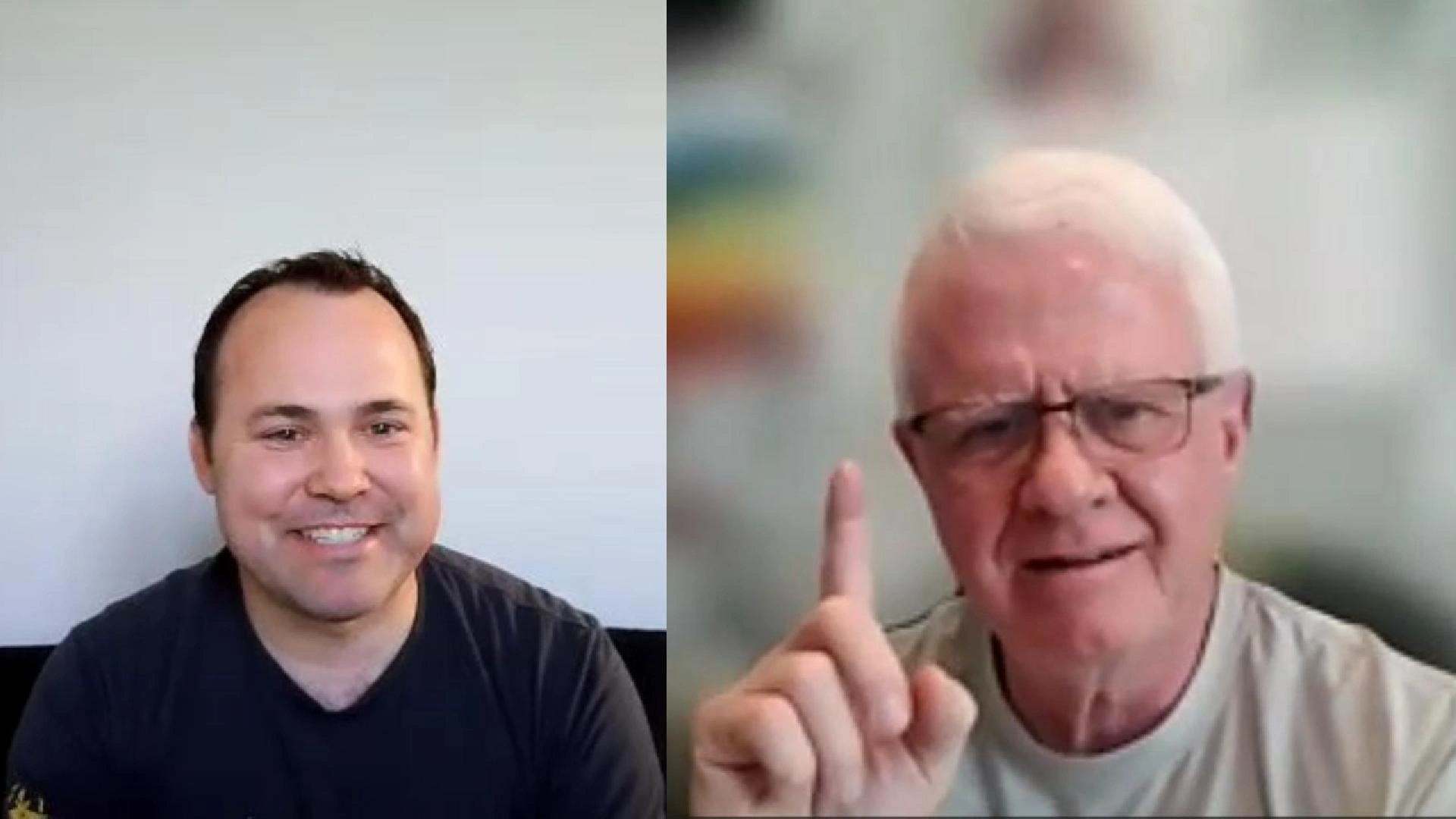
Spotlight Series topic: Health Span vs Life Span – How to roll back the clock and live healthier longer
Guest Name: Brent Howell
Guest Credentials: Owner of Silver Fox Fitness
Discussion Details: We discussed the 5 pillars of improving Health Span and that it is never too late to start. Brent works with people over the age of 50 who want to get their lives back and start doing things they were doing 10-20 years ago.
Benefit of Watching: Learn the 5 pillars to living a healthier and longer life.
Address of guest’s business:
1941 E Murray Holladay Rd,
Holladay, UT 84117
Brent Howell: Thank you for uh having me here. And I want to thank you for your your style of business, too. You your physical therapy has helped so many of my clients.
Isaac Halliday: Oh, thanks. Thanks.
Brent Howell: get back and doing what they need to do. So, thank you.
Isaac Halliday: Yeah. Uh, absolutely. Um, but yeah, I that’s why I wanted to bring you on. Um, I like the way that you go about things and kind of approach your your angle and all that stuff. Uh, what made you what made you want to first what made you make the change in reversing your own lifestyle and then what made you then want to move into like, hey, let me just coach other people?
Brent Howell: Yeah. So, one of my biggest joys in life is uh being active with my children uh when they were younger and now my grandchildren in uh these later years. Um when my children were younger, I took them backpacking and hiking and all those kind of outdoor stuff instead of taking them to Disneyland. And it’s something that uh I’ve wanted to continue to do with them. And in fact, I just last year went on a backpacking trip with my six-year-old grandson. and my son and uh it was a great joy to be able to continue that tradition. Uh but uh in my own life uh my mid-50s like I said uh I found myself after living a corporate life um style uh that I was metabolically challenged and I had metabolic syndrome facing pre-diabetic my doctor was saying I was facing cardiovascular disease and I just said uh there’s got to be a better way. Um it was about the same time my uh middle daughter announced that we’re going to have my first grandchild and it was like oh I’m not going to be that grandpa that I want to be. I got to fix this. I got to do something. So I hired myself a person personal fitness trainer and uh started working with my medical providers as well and basically reversed everything. um because most of this is lifestyle uh it’s got to be lifestyle changes that we’ve got to take on. Um and so I adopted those and um and then when I decided to retire my coach u and p personal fitness trainer asked me what I was going to do and he says you got to become a personal fitness trainer. And so that’s the genesis of this. It was just a simple question and I thought yeah that way I keep going and I can help share the experience that I’ve had and learned uh from with others and uh so that’s why I’m here.
Isaac Halliday: That’s awesome. That’s cool. I love um Right. I mean, health and fitness like it it is that lifestyle change or I think a lot of people like have that like, oh, if I just do this diet or if I just cut my calories back or if I just whatever it might be, they’re like, oh, I’ll feel better, I’ll be cool, right? But it’s it’s more than that. It’s not just like, hey, let me just do this for a summer or do it for a winter so I have the summer bot and then I can do whatever I want in the winter again. Yeah. You got you got to train those habits and those lifestyles to to stay healthy.
Brent Howell: Yeah. And actually before that, you know, that’s basically what I was doing. It was like I’d try something once and and it had helped me a little bit and then um life would get in the way, so I wouldn’t keep with it. And and then I was back in the same boat I was in. And then it, you know, it was just a yo-yo. And so it was it was a time in my mid-50s where I took some serious time to reflect and say I got to make this a serious change and do it. So and that’s what led me to here. You know that leads to one of the biggest misconceptions that uh I found is that everybody says oh it’s too late.
Isaac Halliday: Yeah.
Brent Howell: Is I I can’t do it. It’s too late. I’m I’m too far down the road. Um, and that is a big misconception that once you hit your 50s and 60s, I mean, we’ve watched this throughout our life where we’ve watched our parents, grandparents, aunts, uncles, and everybody else around us aging that once you hit your 50s and 60s, everything just starts to go downhill. And there’s no way to reverse that. And that’s the biggest lie that there is. We can change and we can keep going. Our bodies are amazingly adaptable uh to uh to change and to become younger. Uh and we don’t have to go down that rabbit hole or that. Yeah.
Isaac Halliday: Yeah. I totally agree. I mean, I have I have an aunt and I think she’s in her 80s and she’s like doing 50 mile bike rides and she’s like she’s just she’s healthy, right? And uh she’s just awesome. And so she she always calls she always calls me. She’s like, “Hey, Isaac, I got a bike ride next week. Do you want to do you want In fact, she just uh this this next one coming up uh it’s a 50 mileer.” And I’m like I’m like Esther I haven’t I haven’t rode my bike in like three years. Like like I’d love to do it but I got to break it out. Like she’s like you’re young. You’re fine. I’m like well but uh like you’re you’re doing better than I am.
Brent Howell: And that was one of my inspirations too was my grandmother on my dad’s side. the family. Um, she lived to 94 and she was so active and sprry up until probably 89 90. It was only that last four years that she just really declined fast and uh and I I often watched well what was she doing you know and I I thought well it was her lifestyle and so I thought well okay if she can do it I need to figure out what I need to do uh I don’t need to copy her I just need to do what I need to do and figure it out. Yeah.
Isaac Halliday: Yeah. Totally. And I think that’s, you know, like you said, it’s that just because you’re going down a hill doesn’t mean that you can just like, hey, you know what? Let me just go the other way. Let me just stop this from happening. Just stop this. Plateau it out. Yeah. Is it going to take work? Yeah, absolutely. Is it going to take time and effort and Absolutely. But I mean, that’s, you know, that’s why we have people like you to coach people through that that jumbo of mess and all that stuff. Yeah. Um but uh and that’s one of the things Oh yeah, go ahead.
Brent Howell: Yeah, one of the things is is everybody thinks about lifespan, you know, the chronological number of years we’re going to live, but we never stop to think about health span and what the quality of that is that we want and we can mold that quality. Uh yeah, we’re all going to get sick. We’re going to have injuries, accidents, and stuff like that. not going to make it so it’s ideal or 100% perfect, but but we can actually mold it to be the best it can be with the circumstances that we’ve got. And uh yeah, and there’s so much misconception out there um and so much misinformation uh u that leads people to believe that they can’t do it and uh and it it it’s so wrong. We can.
Isaac Halliday: So yeah, you know, and so like I mean with that I mean right we have lifespans like cool I can live to 90 I can live to 100 but like what is that quality of life going to be right? Is it is it a healthy life or is it a lay in bed life?
Brent Howell: Yeah. And there’s two doctors that I’ve been coming that I’ve been following. Um, and the number one pillar, I have five pillars, and the number one pillar is muscle health. And Dr. Gabriel Lion and Dr. Peter Aia, they both talk about how being able to move and strength and muscle health is the key foundation uh to to that health span. If we don’t have that, diet, I mean, diet plays into it. That’s my number two pillar. And sleep plays into it. That’s my number three pillar. Um, but those pillars all hinge on the metabolic and the metabolic health hinges on your muscle strength and your muscle tone and stuff like that. And so that’s my number one focus. And when somebody comes into me, that’s what I we focus on first with assessments and uh figuring out where they are and how conditioned they are and how conditioned that we can get them to. Um and they’re usually pretty excited. I I have a an 80, he was 83. I started with him in December and he was a pro golfer, a pro bowler back in his younger years back when he was in his 20s and 30s. Um, and he’d given all that stuff up. And so he started with me and we’ve actually got some things going and he said to me the other day, I can get back on the golf course. I says, yes, you can. I says, you’re not going to be a pro at it anymore, but yeah, you can get back. and he was so excited just to be able to go spend time with his family uh and friends golfing again. And uh I I think later this summer he’ll be back out on the golf course. It is so cool to see.
Isaac Halliday: That is cool.
Brent Howell: Six month six, eightmonth period of time he’ll be able to get back to where he mentally wanted to be.
Isaac Halliday: Yeah, that’s awesome. That is so cool. which which that mental part is your last pillar, isn’t it? Yeah. Yeah. Right.
Brent Howell: So the mental and emotional resilience and stuff like that and so um but if we have a healthy body uh and good strong muscle, it usually molds into it. Yeah. Yeah. They all kind of mold together, work synergistically uh to help each other out. and but understanding how they all work together and how the lifestyles that we can create so that we’re getting enough sleep so we’re getting enough recovery so we’re goes out to the gym and they forget um they forget about uh recovery. they just want to go to the gym and hit it hard and then they hurt and then they so it’s good to have a coach to help you to focus on how to recover and and to dial it down. So yeah.
Isaac Halliday: So, so like when right so when someone comes to you and they’re like hey like this is my first day and I don’t know what I’m doing like what do we like what is the process that you do to like make sure that you’re hitting these pillars or that they’re you know they’re getting the right workouts like I walk us through that process that you you take
Brent Howell: Yeah. to somebody comes in. Um the first thing we do is we’ll sit down and um go through some questionnaires. You know, what’s your sleep habits? What’s your uh lifestyle? What’s your nutrition? You know, where are you at right now? What are you doing? Um where’s your emotional stability health and mental health? You know, what what’s that? And then I run them through probably probably about 10 physical assessments similar to what you do when you have a client come in, you know, to figure out where their conditioning is and what their muscle strength is and and stuff like that. So, I’ll run them through those kind of things. Um, get a broad picture of them. Then we’ll talk about their goal and what they really want to do. And number three that and the most important is is their why. Uh because I can’t motivate anybody that doesn’t have a why.
Isaac Halliday: Yeah.
Brent Howell: You know, it’s like trying to move a elephant off of a Yeah. when it doesn’t want to move. It doesn’t work.
Isaac Halliday: Yeah.
Brent Howell: It doesn’t work. So anyway, we go through that process. Uh it takes about me um three to four sessions to get a a a good picture of of that. And then that first month, um, I’m re-evaluating all of those things, that baseline, and usually I’ll uncover some, uh, muscle imbalance in an ankle or a knee or something like that that I didn’t pick up or or something like that. And so that first month is per more more basically or more basically basically just a a full assessment time where I’m figuring out who they are. And then that’s when I create the program. And my program is typically based on a year’s year-long process. Anybody that comes in and says, you know, I want a a bikini body in um 3 weeks or four weeks or something like that, I go down to somebody else. My my coaching is a year-long process to uh really get you where you want to be. Uh and so that’s basically the system that I have uh developed. And and like I said, I’ve I’ve learned from a lot of doctors over the years. Um I’ve I’ve uh certified through NASM uh National Association of Sports Medicine uh and continuing to learn things through them as well as as uh other doctors that are into big into health span and stuff like that. So yeah, that’s one of my curiosities is how I can always do this better for not only for myself but everybody else. Yeah.
Isaac Halliday: Yeah. There’s the uh there’s which you know is is so important. That’s like hey you know what yeah you might be a good a good coach but if you’re not improving like right everyone’s got to be improving and and I love how how you stay on top of all that stuff. Um and uh right even with you know when you’re you know like you build out a long system because you know that changing a lifestyle or habits takes time. It takes a long time, right? And uh Yeah. Yeah. I mean, I think I man I can’t even remember how many gym memberships I’ve had um through January to February and then you forget that you have them and by the time it’s November, you’re like, I I’m still paying for this. I haven’t gone in in eight months.
Brent Howell: Yeah. Yeah. And I I really like to try and create the mindset that they’re an athlete for life. Yeah. U you know, I know you’re a wrestling coach and you want that wrestler to be there for four years in the high school program because you know it’s going to take him four years to to even begin to get to his fullest potential. And so anybody that just does it for a year or less or something like that, they they got to understand that it’s a lifestyle. And I mean, a lifestyle for life is just not something that’s a a whim. Uh and that’s usually my best client is somebody that’s had gone through the same process that I went through and um had that epiphany when they’re somewhere in their 50s or 60s and saying, “Uh, there’s got to be a better way. I got to find it. And that’s the one I really want to talk to because then I know that they’ve got a why that’s um going to be keeping keeping them motivated. Yeah.
Isaac Halliday: So, yeah, that’s good. I mean, I think um I mean, we’ve kind of already touched it, but like you know what what is the biggest mistake that that we make um with not just fitness, but like people after 50 because things things are different, right? You can’t just Yeah. go hit the gym and go super hard and it changes after 50. So like what is kind of walk us through like what is the difference between right working with anybody that just works with a lot of younger athletes versus people that specialize like you and people in their you know 50s and older.
Brent Howell: Well, one one of the things that um so back in my generation, running was everything. Cardio was everything, you know, and I grew up with that and and now I’ve come to realize that over prioritizing cardio doesn’t uh do anything for my metabolic health. I mean, I have a great cardiovascular system, but my uh overall metabolic health, my muscles are toast. And and so that’s one of the big pitfalls that I think that um because we’ve been conditioned over time to see those kind of things. Um uh under undertraining strength uh most people think I can’t lift that much uh I can’t do that. and and where they’re fully capable of doing that. Um, and that’s something I and I don’t want to this coming across bragging or anything, but when I was finishing my time with Nick, he fired me when I became a coach uh, as a client. He says, “You you got to be your own coach.” And and I appreciate him for doing that. But anyway, that last year when I was with him, he says, “We’ve met all your goals. What do you want to we got him to get a new goal?” and he wanted me to become a and he was joking because he knew my reaction was going to be a bodybuilder, get up on stage in a bikini and or a speedo or whatever they do and and do that kind of stuff. And I said, “No way, Nick.” Uh so he says, “Why don’t we do powerlifting?” And um and so I I did and uh in about a 9 10 month span, I could to where I could deadlift 385 pounds.
Isaac Halliday: That’s pretty solid.
Brent Howell: And if you would have if you would have said that to me uh six months before that that I did that that I would said no I can’t do that. You know we we underestimate the the ability of our body. Yeah there’s definitely some things that we’ve got to be focused on. you know that as a personal or as a physical fitness or physical therapist uh that the body has to be in its right place to condition to do that kind of stuff. But we you know we just have so much capability that uh we don’t even um that’s another thing that speaking of the year uh as we get older we ignore mobility. We don’t take the time to do those things that keep us mobile and uh little exercises that uh basically the type of exercises that you give somebody to get their ankle or their shoulder or their knee back in shape, right? And uh we kind of tend to forget that kind of stuff and uh and so we don’t do it.
Isaac Halliday: So yeah, totally. And and honestly from what I’ve seen too is, you know, as as people get older, yeah, they get a little weaker um and their mobility decreases, but I I’ve also noticed that as as their strength increases, their mobility increases naturally with it, right? And and I think you know that a lot of us we spend so much time on stretching and stretching and stretching and and we forget the strength training part and nothing really improves because right the muscle’s just dying to be stronger and it just wants to be stronger to be able to handle the range of motions you’re trying to take it in. And yeah, yeah, the body’s smart.
Brent Howell: Every time you every time you uh see a client come in, you probably take them to um help them to understand that that that imbalance that they’ve created with their muscles is created the injury that they’re trying to recover from.
Isaac Halliday: They stretch and they, you know, they say, “Hey, yeah, it feels I feel better after I stretch for, you know, afterwards for maybe an hour, but it just keeps coming back.” It’s like, well, yeah, cuz it’s it’s wanting strength. It wants Yeah. Right. It wants to be trained to do a job. And flexibility isn’t always the answer, right? Or or stretching isn’t always the answer, I should say.
Brent Howell: We hear that so much. I mean, there’s so much misinformation out there with the, you know, stretch this, do this, and and roll that and Yeah. And it’s so often times the the the muscle building just gets ignored. Um, and I’ve come to appreciate over the last few months as I’ve been thinking about this that my five pillars that our whole body is designed to maintain and work our muscles. That’s the engine. The muscle’s the engine. The brain, it’s the nervous, the control system. The cardiovascular, it’s the energy system. Digestion part of the energy system. You know, uh everything is about our muscles and we just forget about them.
Isaac Halliday: Yeah. We age. Yep. And that’s a sad deal. It is. And you know, you just you know, you know, bring up everything as I mean the heart, right? It we can’t live without it. But it’s it’s nothing but a giant thing of muscle that’s that’s there to pump nutrients to the rest of the muscles.
Brent Howell: Yeah. Yeah.
Isaac Halliday: So that they can work. Totally. And you know they’ve done they’ve done studies too on um on hearts. And it’s kind of fun to see is people that weight train have stronger hearts than those who don’t weight train. Yeah. And uh Right. And it’s just because you know when you’re using your muscles it needs more um you know it just needs more oxygen more blood and yeah
Brent Howell: that was an interesting study that I read a while back too is that uh it was a study done out of Ball State University and they took two groups. those that were had exercised started when they were in their 40s and exercised through their 70s. A group actually three groups, a group that didn’t exercise that were in their 70s and then they had a control group that were in their 40s and they gave them a similar type of exercise program and it was a year a longer three-year study or something like that. Yeah. But the interesting thing, one of the findings was that those that were in their 70s that exercised and followed this program, their hearts became as strong as the 40 year olds.
Isaac Halliday: Yeah. It’s cool, right?
Brent Howell: Yeah.
Isaac Halliday: It’s like just full age reversal, right? It’s cool. I mean, I guess it’s not fully reversing it, but it’s just like slowing time. Yeah. Yeah.
Brent Howell: Just giving you more of more life. Really? More life. Yeah.
Isaac Halliday: Yeah.
Brent Howell: Until all of a sudden it just says, “No, I’m done.” Yeah. Yeah. In fact, Dr. Peter said, you know, it would be great if we could have a flatline of 100% perfect health span. All our body just run perfectly until we reached the magic age that we wanted to die and just drop dead.
Isaac Halliday: Yeah, that would be whatever that was. That would be perfect.
Brent Howell: We were basically never sick in our life with any of the metabolic diseases like um cancer or neurodeenerative diseases or any of those kind of things, cardiovascular disease, you know, we just perfectly lived and then just dropped it.
Isaac Halliday: Yeah. Yeah. That would be which, you know, which we do that through, you know, your pillars just like you said, right? mobility, exercise, nutrition, sleep, and then mental and emotional resilience, right? We That’s how That’s basically it, right? If we can
Brent Howell: That’s how it’s done.
Isaac Halliday: Nail those down and keep those habits for a lifetime. Yeah. That’s basically what’s going to happen. Yeah. So,
Brent Howell: so if anybody’s watching this and has been inspired by this, I would love to talk with them.
Isaac Halliday: Yeah. How do they get a hold of you?
Brent Howell: Uh they can reach me at they can find my website Silver Fox Fitness.com uh they can find me on Facebook Silver Fox Fitness um and then certainly reach out to me the phone number 801815-5419 love to set up something uh a quick consultation. No pressure, no hype. I just love to talk to people and find out where they’re at and and if I can help them, great. If I can’t, if they want to do things on their own, uh, that’s great, too. I can give them some guidance on on how to get started with that as well. I’d love to do that. I want to see people change.
Isaac Halliday: Yeah. And where where are you located?
Brent Howell: Uh, right now currently I’m working out of Drive Corrective Fitness. It’s on um 1941 uh East Murray Holiday Road. Um it’s a great gym. Uh the owners of the gym have, as you can tell in the name, Corrective Fitness. That’s what they’re focused on is helping BA people get their uh mobility and their function back to way where it should be. And uh it it’s a great place to come feel. There’s no uh judgment. Uh it’s just a good feeling. So awesome. Great place to work out of.
Isaac Halliday: Awesome. Well, Brent, it’s been fun having you on and and chatting with you as always. Um and uh yeah, it’s it’s man, it’s all about lifespan versus uh health span, right? And just making sure that we can Yeah. increase that health span and be younger even though our age is getting older feel.
Brent Howell: Thank you again for having me because I know you have a lot of the same philosophies of life and and so it’s been a pleasure awesome working with you.
Isaac Halliday: Well great well until next time. All right. Yep. Take care, man.
Brent Howell: You too. Thanks.