
Spotlight Series
Interview with Parker Brimhall
Rethinking Pain Relief: Why Massage Doesn’t Have to Hurt to Be Effective
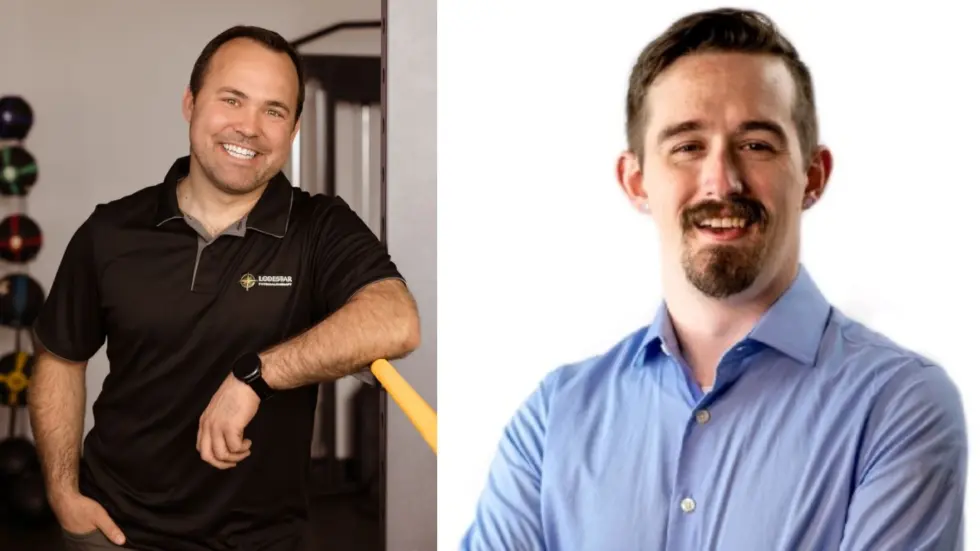
Spotlight Series topic: Rethinking Pain Relief: Why Massage Doesn’t Have to Hurt to Be Effective
Guest Name: Parker Brimhall
Guest Credentials: LMT, MSTR, NKT, Owner of Millcreek Therapeutic Massage.
Discussion Details: Are you tired of the “no pain, no gain” mentality when it comes to massage therapy? In this insightful episode of the Spotlight Series, Dr. Isaac Halliday sits down with Parker Brimhall of Millcreek Therapeutic Massage. With 18 years of experience, Parker challenges common misconceptions about deep tissue work. Instead of using aggressive, painful pressure, Parker utilizes specialized techniques like scar tissue release and muscle testing/activation to identify the true root causes of pain and restore movement naturally. If you’ve been dealing with chronic discomfort, migraines, or lingering injury symptoms, this conversation offers a refreshing, scientific, and evidence-based perspective on getting you back to the activities you love.
Benefit of Watching: Learn the truth about “painful” massage: Understand why excessive, bruising pressure isn’t always the solution and how to find the specific “good hurt” that actually releases tension.
Discover the power of muscle testing: Gain insight into how a targeted, analytical approach to massage can identify compensation patterns that traditional deep tissue might miss.
Understand the role of fascia and scars: Learn how old injuries and scar tissue can store “memory” in the body and how specific release work can restore mobility—even decades after an incident.
Get a roadmap for recovery: Whether you are dealing with migraines, athletic injuries, or daily aches, see how a comprehensive health history and customized care can help you reconnect with your body.
Address of guest’s business:
4455 S 700 E #201, Millcreek, UT 84107
Interview Transcript
Dr. Isaac Halliday: Hi, I’m Dr. Isaac Halliday at Lodestar Physical Therapy. I’m here with Parker Brimhall, who is the owner of Millcreek Therapeutic Massage. He is a massage therapist with 18 years of experience. He specializes in injury recovery and scar tissue work. Um, he also uses uh scar tissue release paired with muscle testing and activation to restore movement after injuries and to relieve pain. So, welcome to the spotlight series, Parker. And um it’s good to have you on, man.
Parker Brimhall: Thanks for having me, Isaac.
Dr. Isaac Halliday: Uh tell us a little bit about yourself um and uh where you started and where you are now and all that all that good stuff.
Parker Brimhall: Thanks for asking. Well, I’ve been a massage therapist for 18 years. Um I graduated in 2008. I worked for a couple franchises for a couple for a few years. I worked for Massage Envy for about eight years and then uh Elements Massage for about seven and I’ve been in private practice now for 5 years uh with Millcreek Therapeutic Massage in uh Millcreek, Utah. I got into massage after I hurt my back when I was in high school. I you know how a lot of people say to lift with your legs and not with your back. I kind of learned that the hard way. Um, I picked up a box and I turned to try to put it onto a van and I pulled a sp pulled a muscle off the front of my spine and I was only 16 and I was starting to live with sciatica and I lived with it until I was about 17 18 and finally I tried chiropractic. I tried physical therapy and nothing was really getting to the root of where the pain was coming from and I finally tried getting a massage and I told the therapist about the injury that I had and the pain that I was experiencing and she said, “Let’s massage your stomach.” And I was like, “What are you talking about? if my pains in my back and down my legs, what does my stomach have to do with it? And she said, “Oh, well,” she explained how the nerves actually have a origination in the front of the spine as well, and there’s a muscle there that can affect those nerves. And she massaged it and it took the pain away. So, I wanted to know how did she understand that and how did she do that to be able to help me with my pain so I can help other people with their pain as well. And so, that led me to go to massage school. And in school, I learned about a technique called structural integration therapy, which focuses on the body’s connective tissue known as fascia. And we look at the body as a building in space, how does each piece of the body affect each piece above it and in return uh below it. And so over time as we have an injury or we create compensation patterns from regular movement that we do, these compensation patterns can affect other areas in the body that become tense and tight. And so we can correct those patterns by identifying where’s the root cause where this all started and get that area of the body straightened out and more mobilized and moving in a better pattern for that person so that they’re not triggering this pain pattern anymore.
Dr. Isaac Halliday: That’s cool. That’s awesome. I love that. Um and you’ve got uh quite a few hours uh under your belt uh with 18 years 20 20,000 hours. Um, that is wild that and that and that you know that like I mean if someone asked me how long I’ve been doing PT I’m like I know about years but I don’t know hours.
Parker Brimhall: That is a goal that I like to keep track of.
Dr. Isaac Halliday: That’s that’s cool. That’s awesome. Fun. Yeah. So tell us um so I mean that’s I mean it’s awesome story how you got started with it. Um what what made you break out and start Millcreek Therapeutic Massage?
Parker Brimhall: I was working for uh Elements Massage when the pandemic happened and I realized that there were techniques that I wanted to incorporate into my practice that I wasn’t really able to offer at franchises just because franchises want their brand to be the same across the board across the country and these are techniques that are very specialized and not every massage therapist is trained in like the massage the muscle testing and the scar tissue work. So, I decided that it would be better for me to work out on my own and be able to offer more technique to a broader range of clientele and help more people out that way um with more of the skill set that I have.
Dr. Isaac Halliday: Yeah. No, that’s cool. That’s awesome. So, we got a little a little co baby uh pandmic baby. I love it. Love it, too. That’s so cool. Um and and then you you did mention like so you do a lot of scar tissue stuff. Um, one I think when people think of scar tissue they right they think, “Oh, that’s got to hurt.” Right. I don’t know. There’s something about the word scar tissue that people like cringe at. I don’t know.
Parker Brimhall: Absolutely.
Dr. Isaac Halliday: Yeah. They’re like scar tissue. Um, so when you’re working on scar tissue, one, where do you know where to work? Two, uh, does it hurt? Should it hurt? All that stuff. Yeah.
Parker Brimhall: Yeah. Great question. So I find out exactly where we need to do release in the muscles by testing the muscles first. We’ll actually do some kines what’s called a kinesiology test by test positioning the muscle in a certain direction and asking the client to activate that muscle and then I try to overpower that activation. If I can overpower that say for instance if I ask my client to flex their elbow and I can unflex their elbow easily then I know that their muscle that flexes the elbow isn’t working like it should be. We know that they’ve been able to flex their elbow as they’re going out their day-to-day experience. So, something else in their system is creating that flexion for them. So, we’ll test their muscle with this muscle testing pro protocol and find out what muscle is creating that flexion of the elbow. And then using that protocol, we’ll release that muscle that’s working too hard.
When we find that muscle that’s working too hard, it usually hurts in kind of a good way. It’s what my clients describe. Oh, that hurts really good. It feels great, but it burns. and it’s like, okay, that’s the spot that really needs to be massaged. Whereas, if we just were to massage the whole area, we might do deep tissue on all of it, but we might not find that key spot that actually needed to be released. So, I don’t do deep tissue over the full body anymore because I don’t feel it’s as effective as really finding that spot that really needs to be released. And by using the muscle testing, we can find out is that a spot in a muscle, is it a spot in the scar that’s become overactive? and is that the area that needs a little bit heavier pressure to get it to work out? But of course, we always want to work with the client’s um ability to withstand the pressure. I never want to push them beyond the point where they’re bracing against me because that starts to create more damage in the tissue and we’re tearing the muscles even further. So then they’re recovering from the massage that we’ve just performed to help them recover from the injury that they had. So, we go I kind of approach it with a lighter to medium pressure to start and then when we find that spot that really needs to be massaged, that’s when I can use a heavier pressure where it hurts so good to get it to really release.
Dr. Isaac Halliday: Yeah, that’s cool. Um, and I think I don’t know. I think a lot of people I mean I work with a lot of athletes and um and I’m a wrestling coach and like that whole like no pain no gain mentality is like so real, right? Even in in rehab, you know, people are like, “Duh, like it hurts, but like let’s go through it.” I’m like, “Whoa, slow down, man. Like, that shouldn’t hurt.” Um,
Parker Brimhall: Absolutely.
Dr. Isaac Halliday: I think that kind of like goes with with like people that come in for a massage, you know, they’re like, “I need I need someone that can really just get an elbow in there.” And um what do what do you say to those people? How do you handle like someone just says, “Oh, no. Just put an elbow in my back.” You know,
Parker Brimhall: I’ve done that a lot for a lot of clients and it’s not as beneficial as you may think it will be. And from my experience, I found that we put that elbow in there and then in a week or two, that muscle is just going to tighten up again and it’s going to be continuing to and you’ll just have to continue to get that massage every month for the rest of your life if you expect that that deep pressure is going to be what’s going to solve it. So instead of just tearing it apart, we need to identify what is that muscle doing. Is it working too hard for somewhere else or is it stuck in that activation? And we need to find a way to help it relax so that it’s not holding on to all that tension pattern anymore. And that’s a great thing that the muscle testing does. It helps us to identify what is the muscle actively doing in the body uh creating its movement around there.
Dr. Isaac Halliday: That’s cool. That’s awesome. And how long have you been doing this uh muscle activation thing?
Parker Brimhall: About five years fully. Um I learned it first in 2018. And when I first learned it, it kind of blew my mind and I decided I wasn’t going to be able to use it. So I put it on the back burner of my mind and then it just kept coming up with clients. So we’d work on the same muscle and it was getting get still getting tight, still getting tight over and over again. And I realized, yeah, it’s a muscle pattern. This is movement that’s triggering this muscle to stay tight like this. So we need to identify what movement is this problem and help the person out of that movement pattern instead of just tearing the muscle apart every week.
Dr. Isaac Halliday: That’s cool. Yeah. And I think a lot of people uh I should not everyone but like a lot of people are like yeah like the bigger the bruise the like bigger the more effective effective or so yeah they wear it as like a badge of honor or something and you’re like you don’t you don’t need that.
Parker Brimhall: Not at all. What’s your goal? Do you want to carry this badge or do you want to feel better?
Dr. Isaac Halliday: Yeah. Exactly. Totally buddy. I love it. Um that’s cool. So, like what is um I don’t know what is kind of like the biggest or like the craziest like success stories that you’ve seen with this stuff?
Parker Brimhall: Um yeah, there are a couple that come to mind. One is a friend of mine who’s a she’s a Pilates instructor and we worked together for about five years or so since I started learning this muscle testing technique and she was in a car accident about 30 years ago and this car accident left her with a large scar on her leg and so when she got out of the car that was the main focus of the paramedics was to get this um big gash in her leg under control so that it wasn’t bleeding out anymore and they didn’t realize at the time that she had also suffered a concussion. So, for 30 years, she’s been living with concussion symptoms, headaches, and this um kind of dizziness and feeling unbalanced in her body and never realizing where it was coming from. So, as we worked together, we first worked with the scar and got her scar under control, got her hips and her leg movement working better, and then we found that she has these concussion symptoms that are affecting the movement around her eyes. And so, we actually used muscle testing to find out what her eye muscles were doing. And when we figured out the dysfunctional pattern in her eye movement, that cleared out all the headaches that she was experiencing.
Dr. Isaac Halliday: That’s wild. That’s It’s really massaging massaging the eyeballs.
Parker Brimhall: Yeah, it’s a good sign.
Dr. Isaac Halliday: Just put a little Q-tip on there and that’s cool. And don’t push too hard.
Parker Brimhall: Yeah, just very gentle.
Dr. Isaac Halliday: Just dig in there.
Parker Brimhall: Yeah, just throw it in.
Dr. Isaac Halliday: No, that is cool. Yeah, like definitely would not think about massaging an eyeball. So, totally. Yeah.
Parker Brimhall: And another client that I had, she had fallen down her staircase and broken 16 bones in the right side of her body, all of her rib cage, three breaks in her pelvis, had shattered her leg, and she came to me wanting to work out the knots that she had after surgery cuz she still felt so stiff and didn’t feel like she had mobility. And I said, “We don’t want to just work out your knots. We want to find out where is the knot really the most stuck.” So, we used muscle testing to find out that she still had some adhesions in her connective tissue around her rib cage and that was affecting her entire right side from being able to flex and bend away from that spot. So, by identifying that spot, we instead of doing deep tissue over her entire right side of her body, we just worked on the one side of her rib cage and her whole side started to feel better.
Dr. Isaac Halliday: Wow, that’s awesome. I love it. Yeah. kind of a a more targeted approach to massage therapy than let’s just massage everything and
Parker Brimhall: Absolutely.
Dr. Isaac Halliday: and hope for the best.
Parker Brimhall: And hope for the best. Yeah.
Dr. Isaac Halliday: Yeah. That’s what I call the shotgun approach. Just throw everything at it and see what lasts. Yeah. Yeah. That’s cool. Um and you mentioned like scar tissue and fascia. How do those like interplay with what you do? And what is fascia and what is scar tissue? Take it away. But yeah,
Parker Brimhall: fascia is an amazing thing. It’s a it’s kind of a a second skin inside of the body. It’s a webbing of connective tissue that branches out through the whole body and it runs in specific lines through the body. So we have a line of fascia along the front of the body, lines of fascia along the sides and along the back. And so by understanding how these lines of fascia work, we know what muscles play into those lines of fascia. So say for instance, if I injured my psoas muscle, my core muscle, that that line of fascia in the front of my body will recruit muscles in my quads and in my upper chest to create that movement for that psoas muscle that is no longer working like it should be. So by working with the fascia, finding where are there adhesions in the chest or in the legs, we can release those adhesions and then strengthen that. psoas muscle give it that signal back into it so that it can work on its own without compensation from the chest or from another area of the body. And similarly with scar tissue that scar tissue plays into the fascia. When we have an injury when we have an open wound the body is just shooting out scar tissue in every direction that it can so that it can close that wound as fast as possible. And then over time it will restructure the scar so that it’s more straight with the lines of the muscles and it’s more mobilized. But on its own, that takes about seven years for the body to restructure that scar. By massaging around the scar and massaging the tissue underneath the scar, we can speed up that restructuring process so that scar is more aligned with the fibers right away. And that gives more mobility a lot faster than seven years down the line waiting for this thing to heal by itself. And we can incorporate that scar and show the muscles and show the body that that scar sometimes becomes overactive because the body sees this as oh this is a new thing and we need to figure out where did this come from? However we can move around it. So it stops sending signals to the areas past that scar and sends it all into the scar itself. So we can actually massage the scar, turn off the scar and then wake up the muscles past the scar so that they create their mobility again and create that stability that they need.
Dr. Isaac Halliday: That’s awesome. That’s cool. That’s really cool. Um Yeah, that’s way cool. So, um yeah, like scar work. Scar work. Total knees. Um like every time I see like a total knee, I’m like that is a scar that needs massaged.
Parker Brimhall: Absolutely. Every time.
Dr. Isaac Halliday: Every time. It’s such a large m large scar. Um uh but yeah. So, um, one thing like we’ve had some crazy stories of like big traumas and stuff. Um, uh, have you had people that have like come to you then like, hey, you know what? I was in this accident like 30 years ago and I still have this shoulder pain or whatever. Can you still work with them even though it’s happened like decades ago?
Parker Brimhall: Absolutely. Yep. That that fascia or muscle connective tissue in the body has a memory. So it sees that event 30 years ago as if it just happened today. It doesn’t see time the way that our consciousness sees time. It just experiences it as this is a part of our life and this is what we’ve gone through and this is going to be with us until we do something about it. So that accident that happened 30 years ago is still present in your tissue until you do some work to kind of get it under control and release it. So, if you’ve had an accident 10 years ago, 30 years ago, however long ago it was, muscle testing can help identify it and get it back under control for you.
Dr. Isaac Halliday: Yeah, that’s cool. Um, our bodies are like master compensators and like we we find good ways around or sometimes bad ways.
Parker Brimhall: Totally. Yeah.
Dr. Isaac Halliday: Around
Parker Brimhall: Absolutely. And that bad way will last for a long time and then one day it just stops. And then that’s when a lot of my clients come to me. They’re like, you know, I had this injury a long time ago and then all of a sudden suddenly I just felt it way up again. It’s like, yeah, your compensation finally gave out.
Dr. Isaac Halliday: Yeah. Yeah. Yeah. Or sometimes they’re just like, I don’t know, my shoulder just started to hurt. And you’re like, oh. And then you ask them all these questions and they don’t tell you that they had an accident until like the fourth visit.
Parker Brimhall: Totally.
Dr. Isaac Halliday: Oh yeah, let’s start over.
Parker Brimhall: Oh yeah, about that. Yeah, let’s let’s look at that.
Dr. Isaac Halliday: Would have been nice at the beginning to tell me that. That’s awesome. Uh so, um yeah, I think a lot of people might hear this and be like, “Oh, I need to be in a in a large accident. I need to go break 20 bones, uh to come see this guy.” Do they do they need to be in an accident to come see you?
Parker Brimhall: No, not at all. A lot of clients that I do see have been in a car accident, but sometimes it’s just something like I was a golfer and I’ve been doing this movement for a long time and now when I do it, I feel this pain in my rib cage or I’m um you know, it’s some kind of activity that that that they do. Um I’m lifting something up heavy over my head every day for work. I’m doing drywall and I’m feeling pain in my low back. So we can use muscle testing to identify where is that muscle pattern happening and what dysfunctional compensation is happening around it so we can get that movement back under control for them.
Dr. Isaac Halliday: That’s cool. That’s awesome. And what if someone just like, “Hey, I like this guy. I just want a good massage. Can they come see it?”
Parker Brimhall: Yeah, absolutely. Yeah. I love doing just general uh Swedish type massage as well. I don’t do traditional deep tissue like most people expect with traditional Swedish. So, my deep tissue, like I said, I usually will use muscle testing to find the exact spot that needs to be released for that deep level of pressure, but I love to do just general relaxation massage, especially with all the chaos that’s going on in the world lately. People are kind of disconnected from their bodies. And a relaxation massage is a really great way to come home to yourself and feel like you’re back at peace with yourself and your body again. And that’s a great way to kind of start back onto the routine. If you’re wanting to start exercise, you’re wanting to start a diet, massage is a great way to reconnect with yourself to be a good jumping off point for those processes.
Dr. Isaac Halliday: That’s awesome. That’s cool. And um what is your process like? Someone comes in for the first visit. What does that look like? How long does it take? All that stuff. Yeah.
Parker Brimhall: So, most clients I typically do about 60 minute sessions for their first session. And with muscle testing, it can take about two to four sessions before the nervous system really starts to show us true results of what’s happening. As we do these muscle tests, we may find a compensation pattern wakes up before we get to the true root of the dysfunction where it really started at. So, it can take about two to four sessions to really get into that root cause of it.
Dr. Isaac Halliday: Cool. Cool.
Parker Brimhall: And in my intake, when I have a client come in, what my process is like, I’ll review their entire health history. So, we’ll talk about any injuries that you’ve had, what are your pain complaints, how is your mobility in that area. I’ll have them actually show me how they can move that area of the body and assess if they have full range of motion there or if something is sticking that we need to look at. We’ll look at scars that they have, if you’ve had any surgeries, even life long life um scars from long ago in your life. Maybe you cut your elbow when you were a kid. That’s a scar that we need to look at and make sure that it’s not causing dysfunction in the system. So, we do a fully comprehensive health history review before we do any hands-on work.
Dr. Isaac Halliday: Oh, that’s cool. That’s great. Um, so yes, man. So, you work on everything from migraines to big toe pain.
Parker Brimhall: Yeah, absolutely.
Dr. Isaac Halliday: From head to toe. Really?
Parker Brimhall: Absolutely.
Dr. Isaac Halliday: I love it. That’s so cool. Um well, that’s awesome. Well, this is so glad to have you come on on and chat with us and let us know more about Millcreek Therapeutic Massage. Um how can someone get a hold of you if they’re like, “Hey, I need to call that guy for my migraines or shoulder pain or maybe I just want a good massage.”
Parker Brimhall: That’d be amazing. You can find me on my website millcreektherapeuticmassage.com or give me a call or send me a text at 385-429-2115. My office is in Millcreek at 4500 South and 700 East. Um I’m just in the northeast corner there.
Dr. Isaac Halliday: Cool. Right on. Awesome. Well, I hope somebody hears this and is like, I need to call Parker and uh um mission accomplished, right? like, no, it’s so it’s been so fun talking with you and getting to know you a little bit more and uh and learn from your expertise. Um and yeah, I’ll we’ll keep in touch for sure.
Parker Brimhall: That’d be great.
Dr. Isaac Halliday: All right, I appreciate your time.
Parker Brimhall: Yep. Have a good one.
Dr. Isaac Halliday: You too. Bye-bye.
Parker Brimhall: by
Ready to move without pain?
Schedule AppointmentBook Your Visit
Ready when you are.
Request a time and a real person calls you back, usually within two business hours. No phone tree. No ‘someone will reach out.’ Just a plan.
- Hours Mon, Tue & Thu: 8:00am-6:00pm, Wed: 2:00pm-5:00pm, Fri: 8:00am-1:00pm
- (385) 743-2757 Prefer to talk now? Call us.
- Same-week appointments available
4.9 · 70+ Five-Star reviews
Typical response: under 2 business hours
Step 1 of 5
Request sent.
That’s the hard part done. We’ll call during business hours to lock in your time. Most people are on the schedule same week.
Visit Us
Care this good, this close.
Lodestar Physical Therapy
- 6070 S 1300 E, Ste 102, Murray, UT 84107 (opens in a new tab)
- (385) 743-2757
- Fax: (385) 831-7092
- Frontdesk@lodestarpt.com
- Mon, Tue & Thu: 8:00am-6:00pm, Wed: 2:00pm-5:00pm, Fri: 8:00am-1:00pm