Spotlight Series
Interview with Mindy Wade
Hormones and Medical Aesthetics – making you feel like your best self
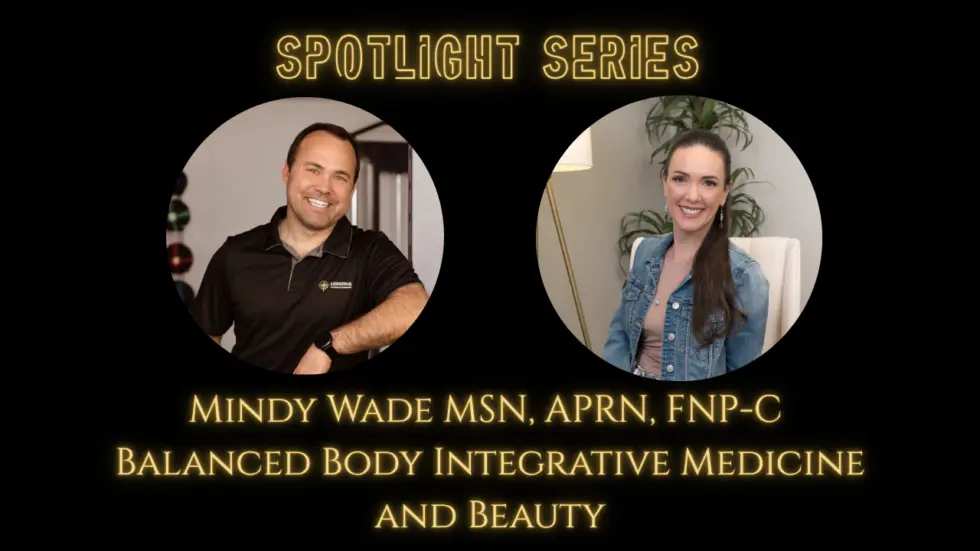
Spotlight Series topic: Hormones and Medical Aesthetics – making you feel like your best self
Guest Name: Mindy Wade
Guest Credentials: MSN, APRN, FNP-C
Discussion Details: We uncover the misconceptions about medical aesthetics and how it is not a ‘vanity’ fix rather a whole person to a better life and better health. We delve into hormones and how they affect how we feel, age, our skin, hair and energy levels.
Benefit of Watching: Gain insight into hormone health: Understand how hormone optimization can alleviate symptoms like brain fog, fatigue, and mood swings, and why it is essential for long-term health (7:56 – 8:21, 32:11 – 33:14).
Clear up common misconceptions: Learn the truth behind hormone replacement safety, including the nuance of synthetic vs. bio-identical hormones and the importance of personalized care (20:00 – 25:57).
Learn about holistic wellness: Discover how medical aesthetics—such as micro-needling and specialized skin treatments—can complement internal health to help you look and feel refreshed (27:52 – 28:47).
Discover a patient-centered model: See how small, independent, and cash-based clinics can offer the dedicated time (e.g., hour-long consultations) that is often missing from traditional, high-volume insurance-based medicine (15:37 – 18:13).
Address of guest’s business:
Balanced Body Integrative Medicine and Beauty
575 N Main St, Kaysville, UT 84037
Interview Transcript
Dr. Isaac Halliday: Hi everybody. I’m Dr. Isaac Holidayiday, uh owner of Loadar Physical Therapy. I am here with my lovely friend, uh Mindy Wade. She’s a family nurse practitioner and the co-founder of Balanced Body Integrative Medicine and Beauty. Uh her passion is helping you feel as vibrant on the inside as you look on the outside and believes that true health requires a highly personalized approach. She specializes in optimizing hormones and crafting customized treatment plans that blend advanced medical aesthetics with integrative wellness. Um her goal is to help you unlock your best self achieving uh lasting total wellness. Uh Mindy, thanks for coming on.
Mindy Wade: [laughter] Thank you so much for having me.
Dr. Isaac Halliday: Yeah, so so excited. It’s been in the works for a while and we finally got it.
And you’re here on your birthday.
Mindy Wade: So, I’m here on my birthday because I took my birthday off and I was like, “Oh, this is a great opportunity to hang out with Isaac.” [laughter]
Dr. Isaac Halliday: I’m like, what a better time to hang out with Mindy on her birthday. So, happy birthday.
Mindy Wade: Thank you.
Dr. Isaac Halliday: Now, everybody who watches this knows that when your birthday is
Mindy Wade: I’m celebrating the 20th anniversary of my 26th birthday. [laughter]
Dr. Isaac Halliday: Yes.
I love it. I love it. Hey, um, how did you even like get into like what started Malice Body? How did you get into what you do? Tell us tell us about such a your path.
Mindy Wade: Yeah, beautiful loaded question. Um, so I started in healthcare when I was um I was like 18. Um, I didn’t know what I wanted to do when I grew up. I had a friend that said, “Become a CNA. Get a job in the hospital and see if it’s something that you’d be interested in.” And so I did, and I found a love for nursing. So I went um while working in the hospital, I went through nursing school. Um and then I went and um went and got my, like, bachelor’s degree in nursing. And then, um, after working as a nurse for 13 years, one of my best friends begged me to go back to NP school with her. And I was like, I don’t know. I’m kind of like cool with where I’m at. And she’s like, please just do it. I’m like, I really just don’t think that that is the path for me. And she’s like, just apply. And I did and I got in.
Um so in between my journey of education, um when I was about 28, um my husband and I decided we wanted to try to conceive children. We thought like we’re you know we have our our stuff together; we have a house, we like we have careers, like things are great like let’s start a family. And um we shortly found out that I was going into menopause and I was 29 when I found that out.
Dr. Isaac Halliday: Whoa.
Mindy Wade: And um I wasn’t having like the classic signs of pmenopause that I didn’t even know what it was. Like I was a registered nurse. I worked in healthcare. I had no idea that this could even happen. And um and I so I was going through perimenopause while trying to conceive doing fertility treatments.
So um I was I was having like the brain fog and the migraines and um and the extreme mood swings that go along with that. Um any um person that has gone through perimenopause or going through it now understands what it’s like. um you have extreme fatigue and it’s hard to build muscle and there are a lot of things that go on during that. Um eventually I was able to conceive but I did end up using donor eggs. So, um my husband and I or I’m not related to my children- so I carried them. I used some other women’s eggs. I carried them and um I had them when I was 35 years old.
Um, my last menstruation before that IVF was like four months before that. Like I I had I was have I started having hot flashes and night sweats, and um I and I begged my fertility doctor. I was like, I know that we’re doing an IVF soon and we need to line it up, but as soon as I can start birth control, please do cuz I cannot handle these symptoms. And so, um, so that’s what we did to time the cycle for the IVF. I had to be on birth control for a few months because you have to line up my cycle with the donor cycle. And it’s I’m sure it’s like it’s very um has to be very precise.
And um so after I had my twins, I never had a cycle after that. And [clears throat] um I went to my primary care provider because I went into menopause so young. Going to an OB/GYN really triggered me. I didn’t want to see pregnant people, and I wasn’t going to have more children. I knew that the twins that I have were going to be the only children that I’d have. And so it wasn’t necessary for me to continue to see an OBGYn for those things. And my primary care would not treat me for my menopause symptoms.
She’s like, “You can work out to build your bones. We can put you on an SSRI, so like an antidepressant to treat your hot flashes.” Um, but it doesn’t help with the brain fog, and it doesn’t help with, I mean, the SSRIs would maybe help with the mood changes, but it doesn’t help with your sleep there. Like, there’s so many things that were not being addressed in that setting.
And so I actually found a person that does what I do now that, um, it really did change my life. I felt like I was maybe even younger than my 30s. Like I felt so much better than I had in 10 years. Like the brain fog went away, the hot flashes went away. Like, my skin, like I still have a lot of dryness in my skin, but my skin integrity improved so much because when your estrogen goes down your qual like your skin gets thinner and different things like that. Um, so those I started seeing improvement [clears throat] in all those areas.
Um, I was working as a nurse and when my friend, one of my best friends talked me into going to NP school, like while we were in school, we we kind of we could um do some specialty uh like clinical uh hours and I really tried to get into um like a fertility clinic setting, but because um like that world is so small, it’s really hard to get any hours in that setting.
So, I was able to follow like a functional medicine nurse practitioner for a bit, and um I also followed a dermatologist um nurse practitioner um at one of the um prestigious hospital clinics in our um in our community and and I found a love for both um functional I’m I am not functional medicine certified, but I do carry a lot of those philosophies. Um, trying to figure out like, you know what the underlying cause is for certain things. Um, it’s my opinion that the underlying cause of menopause is your ovaries stop working right, and if they’re not making those hormones, then you need to replace those hormones.
Um, it will improve so many things across a person’s lifespan, but I’m gonna kind of just focus on women, even though I do my I do have, um, quite a population of men that I also treat for hormone replacement. Um but uh to kind of talk about how I got here, um, knowing that I can help other women treat their menopausal parmenopausal their even if they’re not those things and they have like PMOS um also known as PCOS [clears throat] uh or or PMDD, like I can help people with those things and I’m passionate with helping people with those things.
Dr. Isaac Halliday: Yeah. Yeah, cool. That is, it’s always fun to see people like, I had this and that’s why I went to go do that. Right.
Mindy Wade: Right.
Dr. Isaac Halliday: Um, a few things, like just so that everyone who sees this knows what like, when you’re like I went to NP school. What is NP school? What is it?
Mindy Wade: So we have an advanced, um, license in nursing.
So we are clinicians. We, um, we are nurses that have, um, gone through additional education so we can diagnose and prescribe medications.
Dr. Isaac Halliday: Cool. So that’s where the nurse practitioner part comes from.
Mindy Wade: Right.
Dr. Isaac Halliday: So like what does that mean to them though, right?
Like if I’m just my average Joe, I’m like, “Oh, cool. Nurse practitioner.”
Mindy Wade: A lot of People say, “So you’re kind of like a doctor.”
Um, I don’t like to say that because physicians really do; they have a lot of education. Um, it’s just a different path to be able to practice similarly. Um, we all have our own um, like practice guidelines that we can practice. Um, hormone replacement is often done um as like an off-label use of hormone replacement and whatnot.
Um but but I can I can diagnose and prescribe, like a physician, I guess I should say, if that makes sense.
Dr. Isaac Halliday: Yeah. Yeah. It I mean it makes sense to me. Yeah.
Yeah. I love it. And then, like, I mean so if someone’s like, ” Hey, I want to come see you” like they could just come straight to you, right, because you have that NP
Mindy Wade: Yeah, they can come straight to me.
Um, there doesn’t need to be a referral. They can just come to me.
Dr. Isaac Halliday: Cool. That’s awesome. Um, and then yeah, um, going into this whole I mean, you listed a lot of acronyms out there that I haven’t heard of.
Mindy Wade: Oh, so sorry. [laughter]
Dr. Isaac Halliday: I’m like I’m like I don’t know what that is. I’m sure if someone has it, they’ll be like, “Yeah, that’s what I got.”
Mindy Wade: Yeah.
Dr. Isaac Halliday: POM PM. So, it’s so PCOS is, um, uh, polycystic ovarian syndrome, but it’s now been renamed, um, because it’s really a metabolic syndrome. Um, it’s more than just the cysts on the ovaries, but um it is a met metabolic syndrome that causes um uh people to have increased insulin that causes weight gain, and it can cause high blood sugars or high insulin levels making it difficult to lose weight.
Um, a lot of um people with this metabolic syndrome uh get cysts on their ovaries and the and and testosterone gets too high, and then all of those things cause more cysts and more weight gain, but the weight gain causes more like so it’s this terrible syndrome terrible cycle.
So if you can get a hold of that, we can manage the symptoms. We can help people lose weight. We can help them feel better. We can, if the person has a syndrome, a lot of times, um, it’s people that were like born as women; they’ll get a lot of facial hair. If they don’t like that, we can help remove the hair. There’s a lot of things that we can do to help them feel and look good, um to whatever that means for them.
Dr. Isaac Halliday: Yeah. To whatever their definition of I feel good in this body is.
Mindy Wade: Exactly.
Dr. Isaac Halliday: Yeah. I love it.
That’s so cool. So, how does, like, what is the process then of like they come to see you and then like, where does it go from there? Cuz it seems uh, complicated. [laughter]
Mindy Wade: So, it depends. Like, we have some people that come in and they’re here for the aesthetics, and they’re like, “Oh, what else do you do?” And then, and then they’re like, “Oh, I want to do my hormones. Oh, I’m having those symptoms.”
So, it can be like people that are like, “Oh, I just want to come in and have some Botox or Dysport or micro needling and um, and they’re like, “Oh, I’ve really been interested in learning more about my hormones.” Like, so there’s that pathway. or if somebody’s coming in to see us for hormones first, then um they usually it’s word um by word of mouth.
Most of our clients or patients, whatever we want to call them, are word of mouth. It’s somebody else that has, you know, a friend, a family member, a cousin. Um, we do get some people that just Google hormone clinics near me and then they look at the websites. And um I we have a somebody that just started seeing us recently, and I asked her, “How did you find us?”
And she said, “I was looking for a hormone clinic. I looked at your website. I saw that it was women-owned and that it’s a woman who is managing all of these things and I felt connected to that and so she came in, she met with us. Um, they usually meet; typically they come in um they call they make an appointment, they meet with my sister who’s our registered nurse, and she does an intake.
So she gets an intake of their symptoms. Um, she draws their blood, um, for the hormone panel. That’s all done off of protocol. And then um and then they will have an hour meeting with me where I go through every single one of their hormones, what that means and how that um correlates to the symptoms that they’re having.
And then we come up with a treatment plan that works for them because what would work for you would be something that works differently for me, which works differently for somebody else. So, there’s lots of different modalities of hormone replacement and we want to make sure that it’s safe and, um, and it’s something that somebody can be consistent with. We don’t like if somebody’s really bad at, like, taking pills, maybe maybe we do something different for them so that we can make sure that we’re providing this as safely as possible.
Dr. Isaac Halliday: Yeah, that’s awesome.
Um, yeah, like just being able to spend an hour with your provider and just going over things is I think it’s almost so foreign in today’s medical world, right?
Mindy Wade: Right.
Dr. Isaac Halliday: I mean, it’s like you’re in out like doctors and other NPs. Um, and you’re also at a family medicine clinic, right?
Mindy Wade: Yeah.
Dr. Isaac Halliday: And you’re seeing how many patients a day [laughter] there.
Mindy Wade: Depends on the day.
But when we’re dealing I shouldn’t say dealing, but when you’re in, like a family medicine clinic that um is insurance-based. Um, it’s a lot of times about volume.
Yeah.
So, so visits are 15 to 20 minutes, and so for example, um, I can see anywhere from 20 to 28 patients a day depending on yeah how however they were scheduled.
Dr. Isaac Halliday: Right.
Mindy Wade: Because, like I’m I’m lucky at that clinic that we get a little extra time for, like our new patients and yeah, different things like that.
Um, or I can let the front desk know like, this particular person needs a little bit extra time with me, so they’ll schedule those a little bit longer.
Yeah. But when you’re looking at it from an insurance-based payer system, it really it it’s it’s not always the it’s about volume like to make for for a practice to run, you need to see a lot of people.
Dr. Isaac Halliday: Yep. Yep. It It’s
And but now they can come to you and be like, I get the whole hour. I am taken care of, which is like so cool.
Mindy Wade: But that comes with a cash-based service, right?
So we we we get to be able to do that because it’s cash. It’s it’s I I shouldn’t say cash, just out of pocket based, like it’s Yeah. So, um, it just makes it so that I get to spend that extra time that people need um, because they deserve it.
Yeah. And, and um and so we have that cash-based system.
Dr. Isaac Halliday: Yeah.
And they’re able to use, like, an HSA.
Mindy Wade: Yes.
Dr. Isaac Halliday: And um, if they want to do out-of-network benefits and submit it to their out-of-network, they can do that.
Mindy Wade: They can do that as well.
Yep. We can create a super bill, and they can submit it and see if their insurance will reimburse. And then labs, if they have insurance, um, the labs that I usually run are not always covered by insurance. I always, um we discuss this with all of our patients, but I always recommend that they call their insurance first to see if the labs are covered through insurance.
If they are, we can have them processed through LabCore, but anything with that is through LabCore. Like we don’t make any money off of that, right? Like it’s just like we draw the blood and LabCore. So if there’s any bills, it’s through LabCore.
Um, but if they’re uninsured, if they don’t have insurance, which is becoming more and more common, we actually, um have a contract with a lab company that gives us good client bill pricing and then, um, we can run those. They just pay us for those labs, and then we pay the lab company to process the labs, you know. And again, there’s not like an extra fee for us to do that. That’s just our cost for those labs, and we just use that and pay directly to that lab company.
Dr. Isaac Halliday: That’s cool. That’s cool.
Um I kind of want to get that I wrote down the questions and then we [laughter] we are um but like one of them, like from your story um, like do you feel like, cuz you you you were going to your your family physician, right? And do you feel like that they didn’t treat you not necessarily cuz they didn’t want to or just cuz they like, I don’t know how to treat this cuz I feel like family as as much as family medicine is needed.
There are times when it’s like you can only know so much or be good at so much, right?
Mindy Wade: Menopause care is part of family medicine practice.
Dr. Isaac Halliday: Is it? Okay.
Mindy Wade: So, so treating a woman with estrogen and progesterone, um is, you know, you can do that.
Um, treating a woman with testosterone, which women’s ovaries make testosterone and that depletes as we as we age because our ovaries aren’t making that as much. That is not the standard of care. So, that would not be done through a family medicine clinic. That’s another reason why we’re cash-based, because that’s not something that you would do um in a family medicine setting.
Um, that said, um, the provider that I saw um it was still quite nuanced, like there’s still a lot of pushback from um people that maybe were educated, um, for, like, you know years before I was where they’re like if you give women estrogen, they’re going to get cancer. And it’s just it’s not true that um but the standard of care was like you can treat with estrogen and progesterone but only for 10 years.
But also there’s there’s not really any data that says like after 10 years you need to stop the hormone replacement because there’s a lot of benefits. It really is um preventative medicine and it needs to be looked at as preventative medicine.
Like estrogen decreases your risk for dementia, osteoporosis, um urinary tract infections. There’s so many things that it actually helps with. And um, I think there was a huge population of baby boomers that were like they were given a disservice because they weren’t treated for those things.
Dr. Isaac Halliday: Yeah. Yeah. I think that leads um, into uh I mean a lot of misconceptions around hormones, right? Like there’s there’s a lot [laughter], and you went into a few of them. Are there other ones that you like hear all the time when people are like ah but…
Mindy Wade: I still get a lot of women that worry about the cancer risk.
Um, there are like they’ve done some uh you know looking back at like past data um they’ve found that women that start on hormone replacement before they go into menopause are at lower risk for heart disease and they’re at lower risk for osteoporosis than and and breast cancer than those that were not started on hormone replacement.
The studies that were done were done with synthetic hormones, and what they were finding is, so um, kind of the old philosophy was if a woman didn’t have a uterus, you didn’t need to be on progesterone. Um, they would treat uh women with a synthetic progestins, and um so the women that still had a uterus needed that progesterone to protect their uterus.
Um, they were given the synthetic progestins, and they found that it was probably that that was increasing the risk just a little bit for breast cancer. And so they saw this uptick in this in the um breast cancer, and they’re like, “Oh my gosh, we have to stop this study. This is causing cancer.” But they thought it was the estrogen.
Now that they’re looking back at those studies, they’re like, “We interpreted this data wrong.” Um, the women that were on only estrogen that don’t have uteruses actually had a decreased rate of cancer. Um, and now they’re finding that, like, the bioidentical and bioidentical is um I I use that term because that is what people are used to.
But if you get your progesterone from any commercial pharmacy, if it’s a micronized progesterone or an estradiol, that is bioidentical. That said, I do often use um, compounding pharmacies because um, I see a lot of shortages, um in commercial um hormone replacement. Like right now, a lot of my patients that are using estradiol patches can’t get their patches because they’re all backordered.
Um I also there were a few um probably about a year ago women couldn’t get their progesterone. And you have, if you’re going to be on estrogen and you have a uterus, you have to be on progesterone because it protects that uterine lining. And so I was like, well, let’s do- let’s have you get your, you know, your progesterone from a compounding pharmacy. Um, another thing that I like about compounding pharmacies is that when you’re getting commercial-based hormone replacement, it’s like this is your dose and that’s what you can get.
With a compounding pharmacy maybe when 100 milligrams isn’t enough progesterone for somebody but 200 makes them really tired because it helps with sleep and different things but maybe they’re groggy the next day so I can have that compounded for 150 milligrams and and that’s not commercially available, right? But that also then we run into that if somebody wants to use their insurance, it may not be covered through insurance.
Dr. Isaac Halliday: Then it’s yeah it’s like, “Oh, but it’s a compound, so we can’t,”
Mindy Wade: Right. But um like what I love about compounding pharmacies also is that they’re privately owned, and I have a relationship with those pharmacists, right? I can call or text their cell phone numbers if I have a question about something or if they have a question about something. Um it’s it’s nice to have that relationship with your pharmacist.
Dr. Isaac Halliday: Yeah, that’s awesome. Um yeah, let’s um so other than um so
Mindy Wade: So those other misconceptions
Dr. Isaac Halliday: yeah’s that, and then also like with the misconceptions of like cuz you do more than just hormone stuff too. You do like beauty stuff. So yeah like I think there’s a lot of misconceptions about that stuff too, right?
Mindy Wade: Exactly. So, a lot of people think that aesthetics is like can maybe be like a superficial thing, and it really isn’t. And if you feel good inside, people also want to feel good on the outside. Um, if you if your hormones are optimized, um, your skin integrity is going to be better. And, [snorts] um, there are certain procedures that we can do to just help refresh your look. Um, so, so I get a lot of women that come in, and they’re like, um, I have all these wrinkles.
Well, let’s do a little bit of Dysport. Um, we can like, I haven’t done like you can see, like how much movement I have in my face. I haven’t done my Dysport in like six months, but um, but if I maintain it like um with the hormone replacement, um I tend to get a longer lasting effect out of those treatments. But I also ask our clients and our patients, like, what is your goal?
Because there are some women that are like, I want to be frozen. I don’t want to have, like, I don’t want to be able to give that dirty look to somebody. I don’t want them to be able to [laughter] read my facial expressions. And then we get a lot of people that are like, I really just want to look more rested. So, they want maybe some more movement. So, we can, we can, we can, um, what’s the word I’m looking for? We can craft something for them that meets their goals.
Dr. Isaac Halliday: Yeah. So, um, and make and makes them feel good.
Mindy Wade: Yeah. Exactly.
Dr. Isaac Halliday: For what they want to feel good for.
Mindy Wade: Yeah. Exactly. Exactly.
Dr. Isaac Halliday: That’s cool.
Mindy Wade: So, um we do have like the um InMode Optimus Max machine that does like um laser hair removal, and it does micro needling and um we can get rid of like age spots.
That’s another thing that happens as we get older.
As we start getting these age spots, we can help with, you know, minimizing the appearance of those or help get rid of those age spots so that they feel better about themselves.
Dr. Isaac Halliday: Yeah. And look younger forever, right?
You’re you’re you’re the fountain of youth is what you’re saying.
Mindy Wade: No, but it’s really funny because I went to a concert. [laughter]
I went to I went to the Ziggy Marley concert a few weeks ago and and we snuck our way to like as close as you could get on the grass area at Redbut and um there was like this group of friends that you like that we sat by and like they were really nice and and we were talking and they were asking our ages and um and he he asked asked me how old I was and I said, “I’m 46.”
And he was like, “No way.” I’m like, “I am 40. I’ll be 46 in a month.” Like, I’m now I am today, 46. And he was like, “I am only three years older than you.” like and and what I took away from that is like he he basically thought that I was like in my early 30s, but really I think part of it is that um because I I I mean we’ve only had this business for seven years, but I’ve been on hormone replacement for 10.
So being able to introduce that earlier, I think has helped um, maintain my skin integrity, but also um, now that I own this practice, I can do the micro needling and the laser hair removal and all of those things too. But I prefer a more, um, like I don’t want to say natural, but I prefer a more natural look. And so, um, so when you look at me, you probably don’t think, “Oh my gosh, it has so much filler in her face.” Or like, I really just want to look refreshed and well-slept.
[laughter]
Dr. Isaac Halliday: Yes. [laughter] I wish I was well slept.
Mindy Wade: Sometimes I wish I was too because I do still have twins.
Dr. Isaac Halliday: But you at least look at you look well slept whether you are or not.
Mindy Wade: Right. [laughter] Right. Between my twins, well, mostly my daughter and my pets, I am not well slept right now. So, [laughter] but at least I look well slept.
Dr. Isaac Halliday: That’s No, that’s awesome. It’s great. And I’m like looking at the camera. I’m like just like, “Oh, no.”
Mindy Wade: I do that every day, and I’m like I need to do but then I’m like But do I when am I gonna find, like, another part of owning your own practice is when do I get to do those treatments on myself?
It’s not very often. So it’s really funny, like the last time I had something, my sister’s like I’m going to run this laser over you really quick between your two patients. We have 10 minutes.
[laughter] like okay I’m down I’m ready.
Dr. Isaac Halliday: I love it. I love it.
Um, so yeah, when I don’t know when someone is like, hey, like when should they be like, hey, this is these are the markers of like, hey, I need to call Mindy, like what what is it that will trigger you’re like, hey, if this thing if these things happen, like this is what I will right be able to help you with.
Mindy Wade: So men and women alike, um, one of the first things that they notice is weight gain without changing what they’re eating or their exercise habits.
Okay?
So that’s telling us that there’s probably a decline in the hormones. Um, they’re having a harder time building muscle, a harder time losing weight, but they’re still eating and exercising and doing all the things the same that they’ve always done. So, so that’s that’s one one thing that often leads people in here.
Um, men, they’ll notice that maybe they, um they they don’t have maybe the desire to be intimate with their partners as much. Um, that’s more common in middle-aged women. Um, that is a really big symptom of perimenopause is that they still like their partner but they have no desire to want to be intimate with their partner.
So so the lack of desire, um being tired of being tired, like you get plenty of sleep but you are so tired all of the time and things maybe haven’t changed, but you’re just tired. Um, it could be they’re wired but tired. Like they go all day long and then they go to lay down and they’re like, “I wish I could fall asleep. I am so tired. I wish I could fall asleep.” So that’s another symptom that people have.
Um, for women, um, they often get start getting urinary tract infections, vaginal dryness. Um they notice that maybe their thin is they’re thin, their skin is getting thinner. Um they are noticing um maybe starting to get irregular periods like their periods are becoming like closer together or they’re becoming further apart. So, um, those are all kind of symptoms that this may be related to hormones.
Dr. Isaac Halliday: Cool. Um, yeah. I’m like, maybe I should come see you. [laughter]
Mindy Wade: Yeah. Yeah. Come in. We’ll evaluate you.
Dr. Isaac Halliday: Yeah. The weight gain that has happened lately. I mean, I’m sure the many dozens of donuts I’ve eaten the last few months and ice cream have not helped.
Mindy Wade: I was telling my neighbor the other day, no, it wasn’t my neighbor. It was my son was having a sleepover and um and I don’t know how it even came up, but I was like, “Well, my dinner tonight is chips and a glass of wine.”
So, [laughter] that’s just that’s this is how much bandwidth I have right now. I’m not going to cook anything. I’m just I’m just this is it. I’m having chips and salsa.
Dr. Isaac Halliday: This is what I have. [laughter]
Mindy Wade: Yep. Yep. This is what I don’t have to make any effort into doing.
Dr. Isaac Halliday: Yeah. So, Oh, that’s awesome. That’s cool. And how can um how can they get a hold of you?
Mindy Wade: Okay, so they can go to our website. Um, our website is balancebodyutah.com.
Um, we have a Facebook page. Um, our Facebook is balancebody Medspa.
And then we have an Instagram page. Um let’s see what our Instagram page is. I’m the worst. Um, our Instagram page is balance_body_Utah or you can call us.
Um, if we don’t answer that just means that we are with clients. Um, oh, did I lose you?
Dr. Isaac Halliday: No, I’m here. Okay. Sorry.
Mindy Wade: No, no, I closed the window so I couldn’t see you.
Um, our phone number is um, 801-820-4462.
If we don’t answer, that just means that we’re helping somebody. We’re a really small family-owned clinic. So, we have our office manager, who is my brother-in-law, our registered nurse, which is my sister Cindy, and then me. Um, and so, between the three of us, we do monitor that phone line, but if we don’t answer, it’s because we’re helping somebody.
Dr. Isaac Halliday: Yeah. Cool. Very good. Is there anything else that like we didn’t touch on that you want to bring up
Mindy Wade: That nobody has to suffer feeling like crap? Yeah. Like um you you you don’t need to feel that way and we we can help you feel better. And if if it’s not hormones, I can help direct you to where you need to go to get the help that you need. Um, and that, you know, we can help you feel and look good. We can help you be your best.
You can have good vitality, and we can help optimize your health, and we can help you reclaim who you used to be, um, in your early 20s, whatever that was for you, your best self.
Dr. Isaac Halliday: Awesome. I love it. So, there you go. Everybody, give Mindy a call. Just feel beautiful inside and out, and it’s going to be awesome. So, yeah. Anyway, go enjoy your birthday. Eat lots of cake and ice cream.
Mindy Wade: Not going to eat any cake. I don’t like cake, but I’m going to have ice. I’ll have ice cream.
Dr. Isaac Halliday: Ice cream. Okay.
Mindy Wade: Ice cream. Ice cream. But I’m not I’m not..
Dr. Isaac Halliday: Donuts.
Mindy Wade: Donuts are okay. I’m more of a savory kind of girl, but I do love myself some ice cream.
Dr. Isaac Halliday: All right. Ice cream it is. Okay. Ice cream. Yeah. [laughter] Yeah. All [clears throat] right.
Mindy Wade: Thank you so much. It was so fun. Thanks for hanging out with me on my birthday.
Dr. Isaac Halliday: Absolutely. [laughter] Okay. We’ll talk to you later.
Mindy Wade: Ok, take care.
Ready to move without pain?
Schedule AppointmentBook Your Visit
Ready when you are.
Request a time and a real person calls you back, usually within two business hours. No phone tree. No ‘someone will reach out.’ Just a plan.
- Hours Mon, Tue & Thu: 8:00am-6:00pm, Wed: 2:00pm-5:00pm, Fri: 8:00am-1:00pm
- (385) 743-2757 Prefer to talk now? Call us.
- Same-week appointments available
4.9 · 70+ Five-Star reviews
Typical response: under 2 business hours
Step 1 of 5
Request sent.
That’s the hard part done. We’ll call during business hours to lock in your time. Most people are on the schedule same week.
Visit Us
Care this good, this close.
Lodestar Physical Therapy
- 6070 S 1300 E, Ste 102, Murray, UT 84107 (opens in a new tab)
- (385) 743-2757
- Fax: (385) 831-7092
- Frontdesk@lodestarpt.com
- Mon, Tue & Thu: 8:00am-6:00pm, Wed: 2:00pm-5:00pm, Fri: 8:00am-1:00pm