
Weeks 1–2
Pain
Calm the symptoms down.
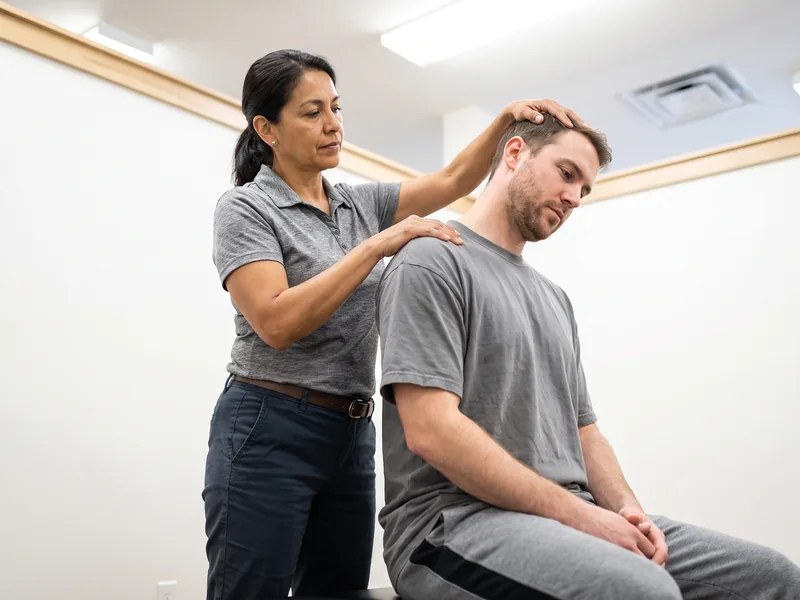
Gentle, symptom-guided care settles the headaches and the strained neck, and helps you find an activity level your brain can tolerate right now.
What We Treat
The headache that won’t quit. The brain fog that makes a normal workday feel impossible. The dizziness every time you turn your head too fast. Recovery isn’t just waiting it out in a dark room, it’s a guided, symptom-paced plan back to your normal life.
Sound Familiar?
Two or more? Keep reading.
Why It Happens
A concussion disrupts how your brain processes information, and it rarely acts alone. The vestibular system that keeps your balance steady, the eyes that track and focus, and the neck that took part of the impact all get affected too, which is why symptoms show up in so many different ways: headaches, dizziness, fog, light sensitivity, or a stiff neck that won’t loosen up.
The first step after any head injury is always a medical evaluation to rule out anything more serious. Once you’re cleared for rehab, that’s where a cause-first physical therapy evaluation comes in: sorting out which of those systems is actually driving your symptoms, so your plan targets the real problem instead of just waiting for time to pass.
The Honest Truth
Nobody regrets getting a real plan early. Every week, someone in our clinic says they regret waiting.
How We Fix It
You want your normal day back: work, school, screens, exercise, all of it. Once you’re medically cleared to start rehab, every plan has an endpoint. Here’s what the four phases look like after a concussion.
Weeks 1–2
Pain
Gentle, symptom-guided care settles the headaches and the strained neck, and helps you find an activity level your brain can tolerate right now.
Weeks 2–6
Prime
Targeted vestibular and eye-tracking exercises, paired with neck mobility work, start rebuilding the systems that took the hit.
Weeks 6–10
Perform
Screens, exercise, and busy environments get reintroduced step by step, at a pace your symptoms can actually keep up with.
Weeks 10+
Prevent
Work, school, and sport get tested under real conditions before you’re cleared to go all-in: that’s the endpoint, not just another appointment.
Thank you for the most in-depth and insightful evaluation I’ve ever experienced! Amazingly personable in providing valuable insights regarding the muscle skeletal relationships that were significantly beneficial in analyzing my physical issues.
Shared by Jack L. · Concussion
Week 1: a headache and brain fog that made a full workday impossible
Week 10: back at a full desk day, screens and all
Questions, Answered
Yes. Any head injury should be evaluated by a physician first to rule out anything more serious. Once you’re medically cleared for rehab, that’s when a cause-first physical therapy evaluation can help you recover fully instead of just waiting for symptoms to fade on their own.
It can, if it’s not dosed correctly, which is exactly why complete rest for weeks on end is no longer the standard advice. A Doctor of PT finds the activity level your brain can currently tolerate and increases it gradually, so you keep making progress without setting your symptoms off.
It depends on how your symptoms respond, which varies more with a concussion than with most injuries. A full plan typically runs through all four phases, Pain, Prime, Perform, and Prevent, over roughly 8-10 weeks. Either way, you get a plan with an endpoint: you’ll always know which phase you’re in and what’s left, not an open-ended string of appointments.
Book Your Visit
Request a time and a real person calls you back, usually within two business hours. No phone tree. No ‘someone will reach out.’ Just a plan.
4.9 · 70+ Five-Star reviews
Typical response: under 2 business hours
Step 1 of 5
That’s the hard part done. We’ll call during business hours to lock in your time. Most people are on the schedule same week.
Visit Us