
Weeks 1–2
Pain
Calm the pain down.
Hands-on work and smart load management settle the angry tendon and take the edge off, starting your very first visit.
What We Treat
The ache that flares the first time you reach overhead. The grip that gives out turning a doorknob. Tendon pain is fixable, and it starts with a cause-first evaluation, not a guess.
Sound Familiar?
Two or more? Keep reading.
Why It Happens
Your tendon doesn’t flare for no reason. And it’s almost never just one thing. It’s usually some mix of four culprits: a tendon asked to do more than it was built up to handle. A sudden jump in your training, reps, or hours on the job. Weakness up or down the chain that quietly dumps extra load on that one spot. And the same motion, repeated, before the tissue gets a chance to recover and rebuild.
None of that shows up on a quick glance. It takes a real, cause-first evaluation to sort out which one is actually driving your pain. That’s why rest and ice alone so often fall short: they quiet the symptom for a week, then the load comes back and so does the pain. Tendons don’t want rest. They want the right load, at the right dose.
The Honest Truth
Nobody regrets starting too early. Every week, someone in our clinic says they regret waiting.
How We Fix It
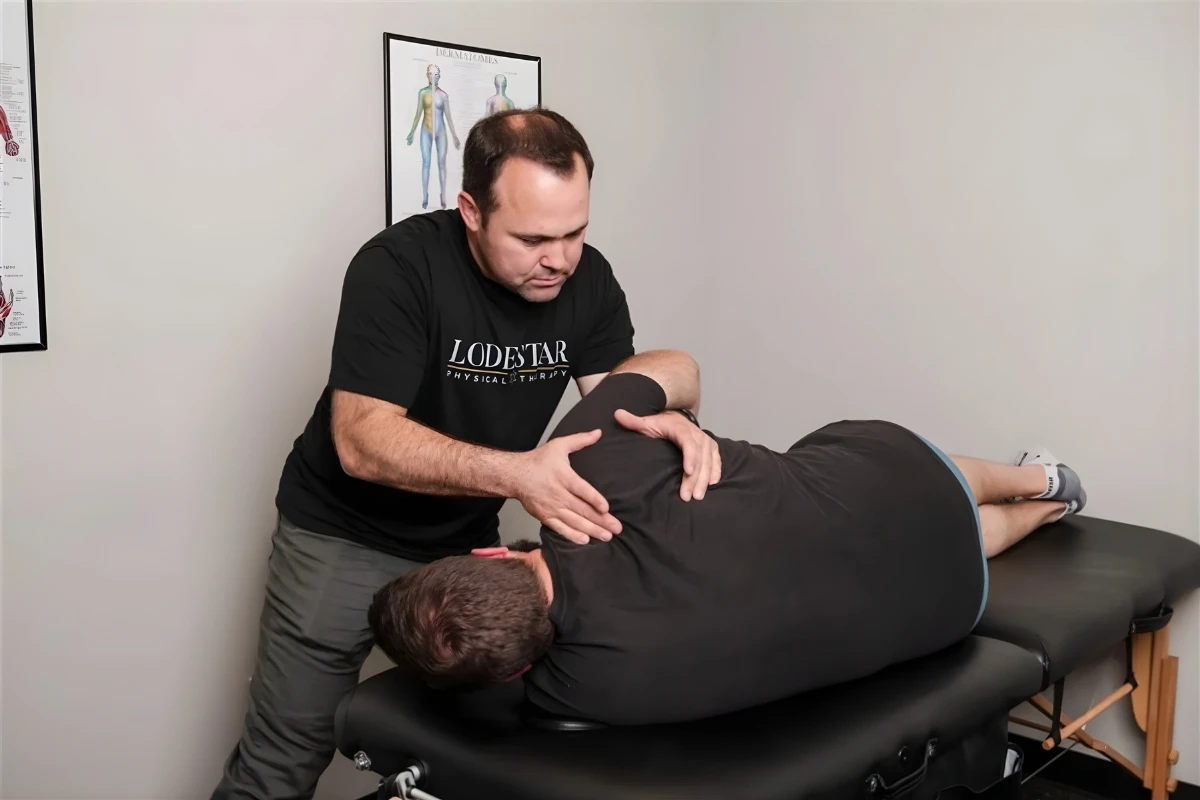
You’re the type who pushes through and works around it. That’s often why the tendon never got a real chance to heal. You’ll work one-on-one with a Doctor of Physical Therapy, every visit. Every plan has an endpoint. Here’s what the four phases look like for a tendon.
Weeks 1–2
Pain
Hands-on work and smart load management settle the angry tendon and take the edge off, starting your very first visit.
Weeks 2–6
Prime
Targeted mobility work restores the range the joint lost while you were guarding the sore tendon.
Weeks 6–10
Perform
Progressive, tendon-loading strength rebuilds the tissue and the muscles around it, so the tendon can take real load again.
Weeks 10+
Prevent
We retest your sport or work motions under real load before you’re cleared to go all-in: that’s the endpoint, not just another appointment.
Absolutely amazing! Totally fixed my shoulders! Before I started PT with Lodestar, I couldn’t even put dishes in my cabinets without pain. Not anymore! I can’t recommend Lodestar Physical Therapy enough!!
Shared by Steven A. · Tendinitis
Week 1: couldn’t reach the top shelf without a jolt in the shoulder
Week 10: back to overhead presses, pain-free
Questions, Answered
Usually not, and it’s rarely the first step. Ultrasound and MRI often show tendon wear in people who have zero pain at all, so a scan doesn’t always point to the real cause. We start with a hands-on evaluation to find what’s actually overloading the tendon, and if imaging ever becomes genuinely necessary, we’ll help you get it. You don’t have to wait on a scan to start feeling better.
Yes, and the right loading is actually how a tendon heals. Complete rest can quiet it for a week, but it leaves the tendon weaker for the load that irritated it in the first place. The key is dosing the right movement for your specific tendon, which is exactly what a Doctor of PT sorts out at your evaluation, then progresses safely as you get stronger.
Most patients feel meaningful change within 4-6 visits. A full plan for tendinitis runs through all four phases, Pain, Prime, Perform, and Prevent, typically over 8-12 weeks, since tendons rebuild on their own timeline. Either way, you get a plan with an endpoint: you’ll always know which phase you’re in and what’s left, not an open-ended string of appointments.
Book Your Visit
Request a time and a real person calls you back, usually within two business hours. No phone tree. No ‘someone will reach out.’ Just a plan.
4.9 · 70+ Five-Star reviews
Typical response: under 2 business hours
Step 1 of 5
That’s the hard part done. We’ll call during business hours to lock in your time. Most people are on the schedule same week.
Visit Us