
Weeks 1–2
Pain
Calm the nerve down.
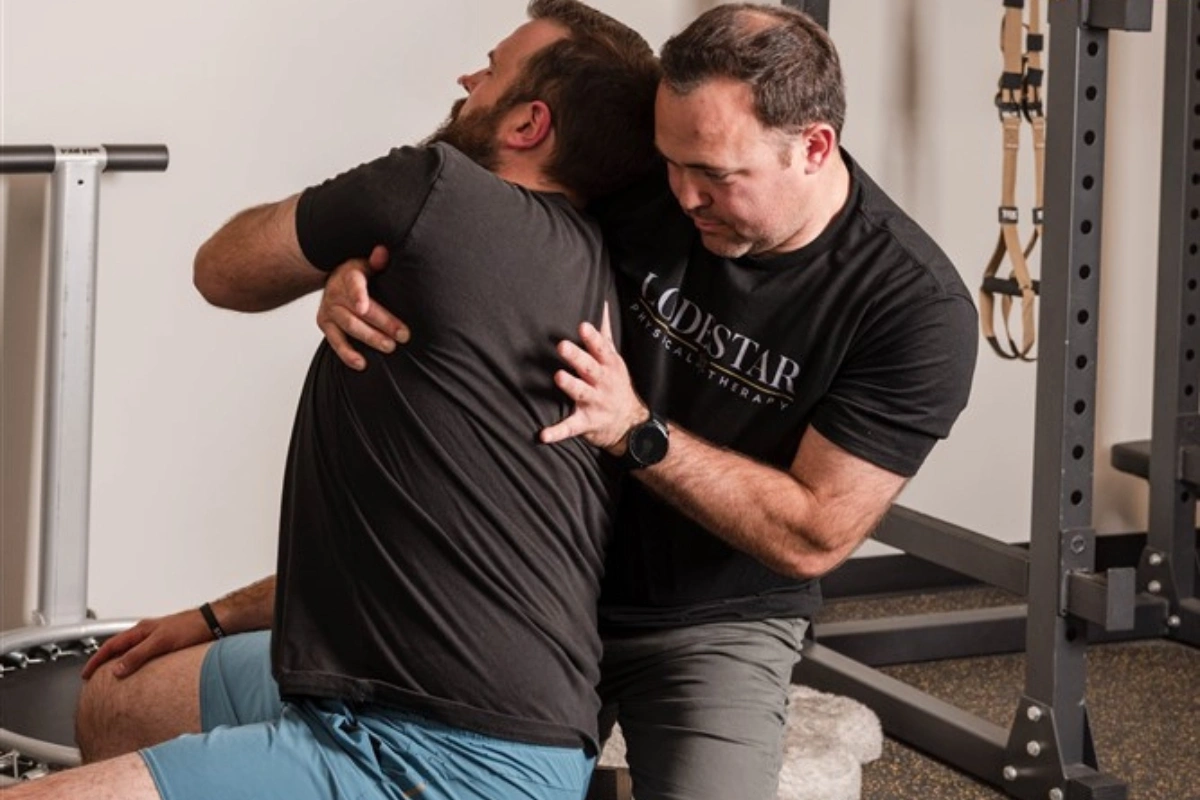
Hands-on techniques and position-based relief settle the irritated nerve and take the edge off the leg pain, starting your very first visit.
What We Treat
The pain that shoots past your back and down one leg. The numbness or pins-and-needles in your foot. The cough or sneeze that lights it all up. It’s fixable, and it starts with a cause-first evaluation, not a guess.
Sound Familiar?
Two or more? Keep reading.
Why It Happens
A herniated disc rarely comes from one bad lift. It builds. The disc’s outer wall wears under years of load until part of the soft center pushes out. That bulge can press or inflame a nearby nerve, which is what sends pain, numbness, or weakness down your leg. Stiff spinal joints, weak deep core muscles, and how you sit, bend, and lift all feed into it.
Here’s the hopeful part: most herniated discs settle without surgery. The body reabsorbs the material over time when the area is unloaded and supported correctly. It takes a real, cause-first evaluation to find what’s irritating the nerve and how to calm it. Find the real cause, and the fix gets obvious. You’ve spent years carrying the load for everyone else. That’s exactly why this is worth fixing now, not someday.
The Honest Truth
Nobody regrets starting too early. Every week, someone in our clinic says they regret waiting.
How We Fix It
Every plan has an endpoint. Here’s what the four phases look like for a herniated disc.
Weeks 1–2
Pain
Hands-on techniques and position-based relief settle the irritated nerve and take the edge off the leg pain, starting your very first visit.
Weeks 2–6
Prime
Targeted movement opens up the stiff segments and helps take pressure off the nerve so it can calm.
Weeks 6–10
Perform
Progressive core and hip strengthening rebuilds the deep support your spine was missing.
Weeks 10+
Prevent
Lifting, bending, and sitting mechanics get tested under real load before you’re cleared to go all-in: that’s the endpoint, not just another appointment.
After having back surgery, Isaac’s personalized approach to PT has been exactly what I needed. The pacing has been just right and any questions I have between sessions are answered promptly. I highly recommend him.
Shared by Shaun T. · Back recovery
Week 1: pain shooting down the leg every time you stood up
Week 12: back to full days with the leg pain gone
Questions, Answered
Usually not. Most herniated discs improve without surgery, and research shows the body often reabsorbs the disc material over time when the area is supported correctly. Surgery is typically reserved for specific cases, like progressive weakness. We start with a cause-first evaluation to find what’s irritating the nerve, then calm it and rebuild support. If a surgical opinion is ever warranted, we’ll help you get one.
Yes, in most cases the right movement helps more than rest does. Hurt doesn’t always mean harm, and too much rest tends to leave the spine stiffer and weaker, which slows recovery. The key is finding the specific positions and movements that take pressure off the nerve, which is exactly what a Doctor of PT sorts out at your evaluation, then progresses safely as you improve.
Most patients feel meaningful change within 4-6 visits. A full plan for a herniated disc runs through all four phases, Pain, Prime, Perform, and Prevent, typically over 8-12 weeks, depending on how irritated the nerve is and how long you’ve been dealing with it. Either way, you get a plan with an endpoint: you’ll always know which phase you’re in and what’s left, not an open-ended string of appointments.
Book Your Visit
Request a time and a real person calls you back, usually within two business hours. No phone tree. No ‘someone will reach out.’ Just a plan.
4.9 · 70+ Five-Star reviews
Typical response: under 2 business hours
Step 1 of 5
That’s the hard part done. We’ll call during business hours to lock in your time. Most people are on the schedule same week.
Visit Us